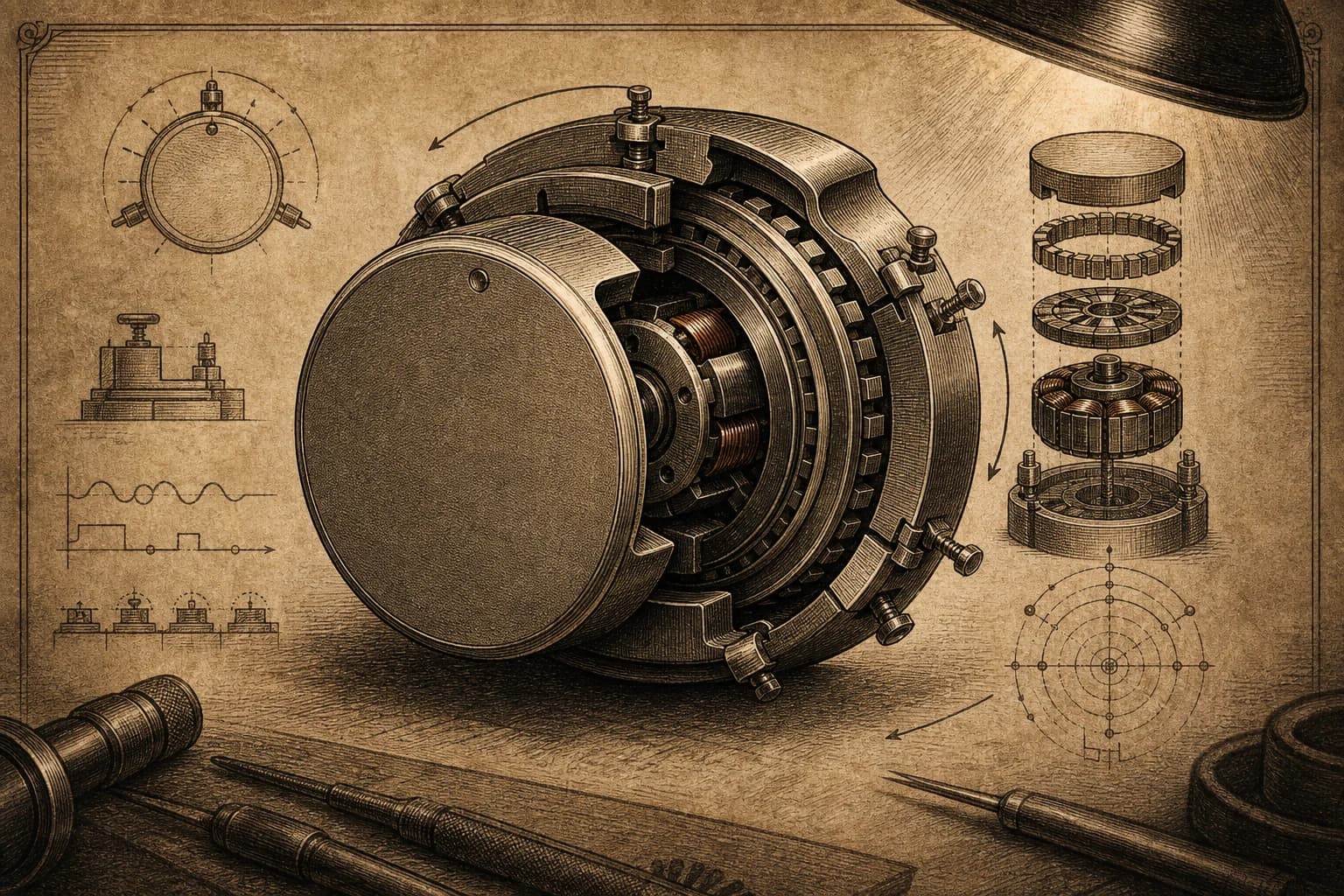
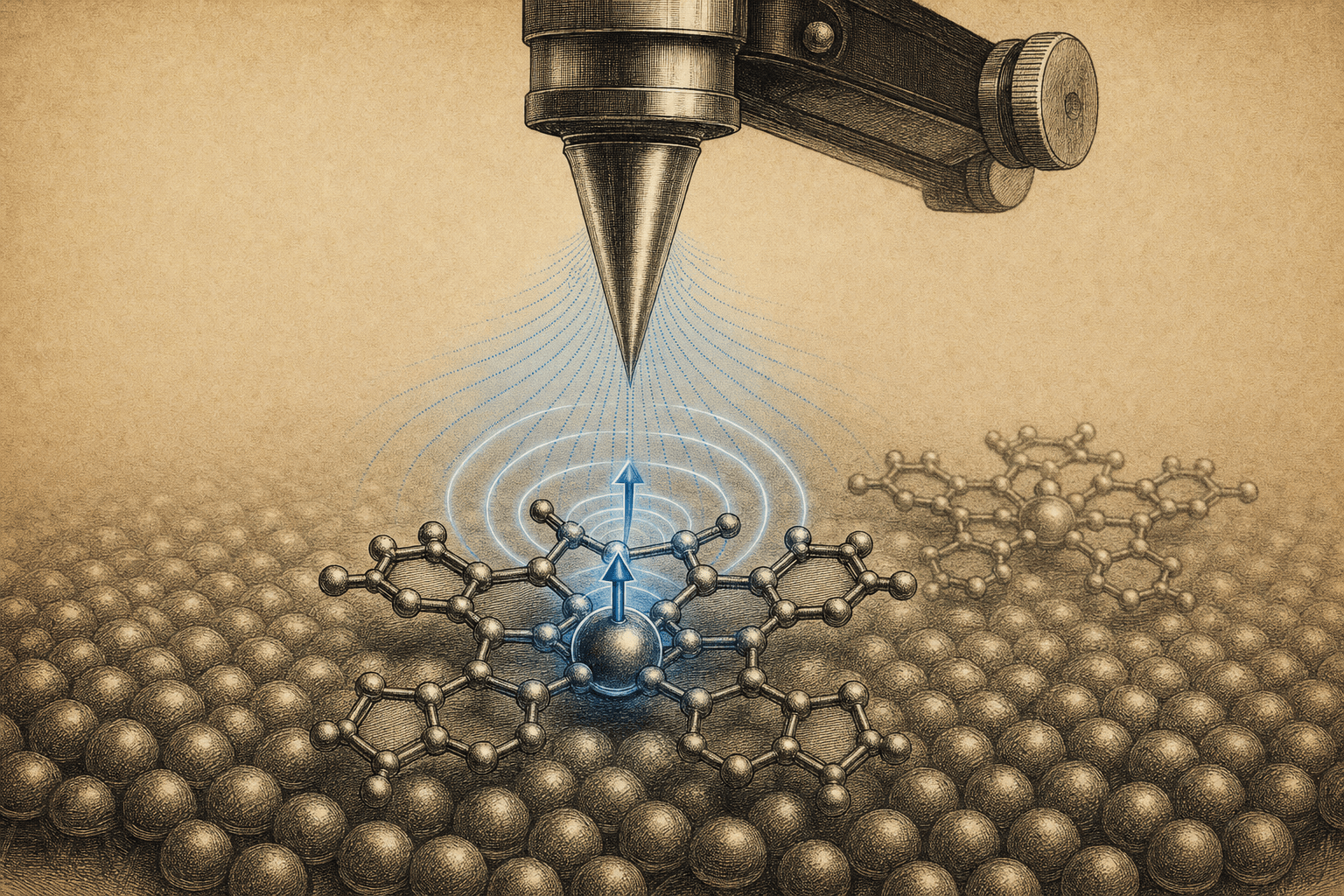
Exchange with a magnetic electrode let researchers tune and coherently control one molecular spin electrically.
Editorial illustration
Editorial concept art of electrically addressing a molecular spin; it is not microscope imagery, a copied apparatus diagram or experimental evidence. Original editorial concept art generated with built-in Codex Image Gen for The Machine Press, 2026-07-29.
Researchers at the Institute for Basic Science and Karlsruhe Institute of Technology used electron-spin-resonance scanning tunneling microscopy to control individual iron-phthalocyanine molecules and related spin complexes. Moving an applied voltage near a molecular electronic level changed exchange with a magnetic electrode, shifting the resonance frequency by nearly 30 percent, while voltage pulses drove coherent Rabi oscillations. The July 29 Nature Physics result is a laboratory demonstration of local addressability, not a scalable quantum computer.
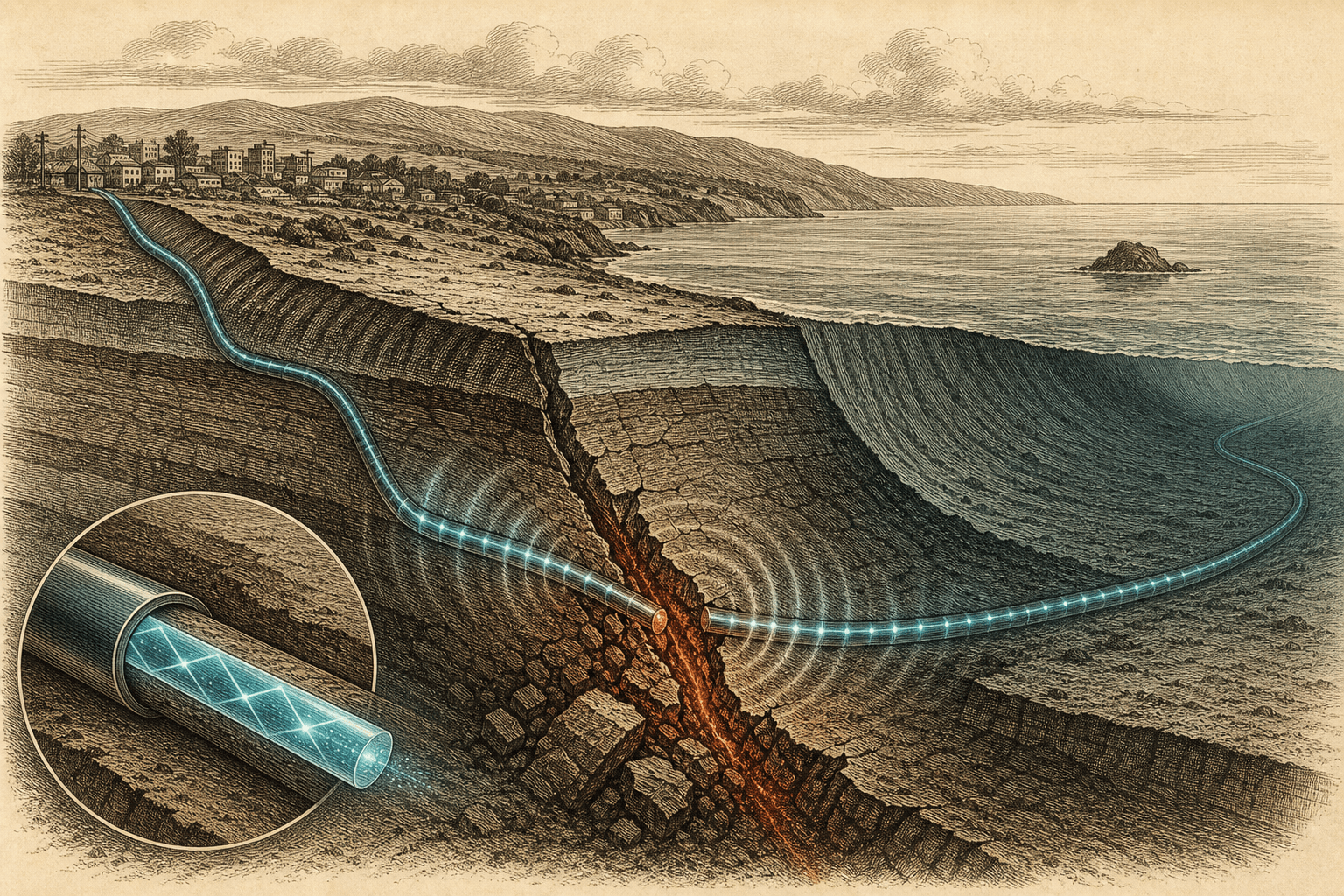
General editorial concept art of infrastructure crossing an earthquake fault; the glowing route is conceptual and does not depict the study's expressways, railways, map, counterfactual network or data. Original editorial concept art generated with built-in Codex Image Gen for The Machine Press, 2026-07-29.
Across more than 1,700 Japanese municipalities, restored expressways were tied to broader post-disaster recovery than high-speed rail.
Researchers analyzed municipal economic and demographic data from 2006 through 2020 around the Great East Japan Earthquake. Their counterfactual model associated restored expressway connectivity with wider gains in manufacturing, population inflow and new-business formation than restored high-speed rail, and estimated that withholding expressway restoration would have added ¥567.3 billion in annual losses by 2020. The study supports network-wide restoration planning, but its historical associations and model do not guarantee the same effect after every disaster.
A national aquarium-university network released breeding resources covering more than 20 marine-finfish species.
U.S. aquariums, universities and NOAA Sea Grant collaborators launched a public resource that consolidates husbandry and breeding methods developed for more than 20 marine-finfish species. Sharing repeatable protocols could expand conservation aquaculture and reduce reliance on wild-caught animals for displays and research. The network is a knowledge and coordination project, not evidence that pressure on every wild population has already fallen.
Generic electronics file image; it does not show the reported binder, electrode, pouch cell, microscopy or performance data. Pixabay / Pexels; cropped, resized, metadata stripped, and converted to WebP by The Machine Press.
A hybrid binder joined elastic polyurethane with polyacrylic acid to stabilize thick, high-capacity battery electrodes.
A Sungkyunkwan University and Seoul National University team reports that its dual-network DHP binder delivered nearly twice the adhesive strength of conventional binders in thick wet-processed electrodes. Commercial-format pouch cells retained 86.8 percent of capacity after more than 200 cycles, while a conventional comparison failed at about 95 cycles. The result narrows a mechanical bottleneck for dense electrodes, but it does not by itself establish electric-vehicle range or mass-manufacturing economics.
CERN's ProtoDUNE vertical-drift apparatus was deliberately pushed through demanding operating conditions before DUNE construction.
The international DUNE collaboration subjected a full-scale vertical-drift prototype at CERN to an extreme stress test meant to expose failure modes before similar components are installed deep underground in South Dakota. Because submerged detector hardware will be inaccessible for decades, the commissioning exercise emphasizes endurance and recoverability rather than a physics discovery. Its success is a prototype milestone; the far detector still faces construction and long-term operating risk.
PNNL and Amazon Web Services will test physics-aware AI tools against simulated grid emergencies and volatile demand.
Pacific Northwest National Laboratory and Amazon Web Services announced a partnership to develop and evaluate AI decision-support systems in PNNL's Electricity Infrastructure Operations Center and a secure hybrid-cloud environment. Planned scenarios include severe weather, cyber and physical threats, and millisecond-scale demand changes from large computing facilities. This is a validation program, not evidence that an AI system is already operating or safely controlling the power grid.
A broad analysis mapped human lung tissue-resident memory T cells responding to viral, bacterial and fungal targets.
La Jolla Institute for Immunology researchers report a comprehensive analysis of tissue-resident memory T cells in human lungs, including responses associated with influenza A, RSV, SARS-CoV-2, Bordetella pertussis and fungi. The work distinguishes immune cells that remain in lung tissue from those circulating in blood and offers targets for future respiratory vaccines. It is an atlas of human tissue immunity, not a tested vaccine or a promise of universal protection.
An eyeless, colorless Alabama cavefish has been described as a new genus and species.
University of Alabama in Huntsville researchers described Demogorgonichthys arcanus from Bobcat Cave beneath Redstone Arsenal in north Alabama. The fish lacks eyes and pigment and can show a faint electric-blue appearance, adaptations consistent with permanent cave life. Naming a new genus sharpens the region's biodiversity record, while its restricted habitat also makes the population vulnerable to changes in groundwater and cave conditions.
Generic computing-hardware file image; it does not show Argonne's model, reactor geometry, coolant flow, training data or results. Natalia S / Pexels; cropped, resized, metadata stripped, and converted to WebP by The Machine Press.
A transformer model predicts turbulent-viscosity fields to accelerate fluid simulations for advanced reactor design.
Argonne researchers trained a transformer architecture to infer turbulent-viscosity fields used in computational fluid-dynamics models of advanced nuclear reactors. Capturing those fields more efficiently could reduce the cost of exploring complex coolant flows while retaining important spatial structure. The model is a simulation aid under research, not an autonomous reactor controller or a substitute for physical validation and licensing.
The gamma-ray tracking spectrometer completed commissioning at the Facility for Rare Isotope Beams.
The Gamma-Ray Energy Tracking Array, or GRETA, has completed first-beam commissioning at Michigan State University's Facility for Rare Isotope Beams. The instrument uses highly segmented germanium detectors and signal processing to reconstruct gamma-ray interactions from short-lived nuclei, with performance reported as anticipated during commissioning. The milestone opens a new experimental tool; it is not itself a nuclear-structure discovery.
A circular-economy model counted steel, copper and other materials embedded in fossil-fuel infrastructure.
Empa researchers modeled 22 materials locked in coal mines, oil and gas platforms, power plants and pipelines. Their scenario analysis suggests recycling that retiring infrastructure could cover all modeled steel demand and roughly one-third of copper demand for parts of the energy transition. The calculation identifies a potentially useful stock, not a guarantee that every asset can be recovered economically or on schedule.
Researchers used electrical-resistivity changes during crystallization to screen metallic-glass-forming alloys.
A Sungkyunkwan University and Chinese Academy of Sciences team proposed the resistivity change that appears when an alloy crystallizes as a descriptor for metallic-glass-forming ability. Their measurement strategy can screen hundreds of alloy compositions in a single experimental run, reducing reliance on slower trial-by-trial discovery. It is a laboratory indicator that still requires confirmation for a candidate's processing window and useful properties.
Generic laboratory file image; it does not show a patient sample, the ESAT-6 biosensor, the study cohort or diagnostic results. Rodolfo Clix / Pexels; cropped, resized, metadata stripped, and converted to WebP by The Machine Press.
In 217 people, a circulating ESAT-6 biosensor distinguished active infection, latent infection and exposure.
Researchers presenting at ADLM 2026 measured circulating ESAT-6, a tuberculosis-associated protein, in blood from 217 people and reported stepwise signal differences among active disease, latent infection and exposed controls. A faster blood test could reduce dependence on sputum, particularly for patients who cannot produce a sample. The conference study used known-status samples and needs prospective validation before it can guide diagnosis.
A mathematical platform model paired penalties with rewards to steer customers toward less congested service options.
Ohio State researchers modeled crowdsourced queueing platforms in which customers choose among service options that create different system costs. Their mechanism returns some penalty revenue as rewards for choices that reduce congestion, improving modeled outcomes without assuming every customer will cooperate. The result is a design framework, not evidence from a deployed delivery, ride-hailing or health-care platform.
A surface-acoustic-wave device combined short-lived signals with electrically stored long-term memory.
Sungkyunkwan University researchers built a reconfigurable device based on two-dimensional transition-metal dichalcogenides that couples electrically written long-term memory with short-term dynamics induced by surface acoustic waves. Switching between the two modes in one component could support compact neuromorphic hardware. The reported semiconductor is a laboratory device, not a production AI accelerator or a benchmarked replacement for digital memory.
Nearly six in ten New Jersey adults supported regulation, rising to about three in four among prior mental-health chatbot users.
A Rutgers-Eagleton probability-panel poll of 1,568 New Jersey adults found broad support for regulating how AI chatbots respond to people seeking mental-health advice. Support was higher among respondents who had already used AI for those topics. The March statewide poll carries a reported ±3.2-point margin of error and measures public preference, not whether a particular regulation or chatbot is effective.
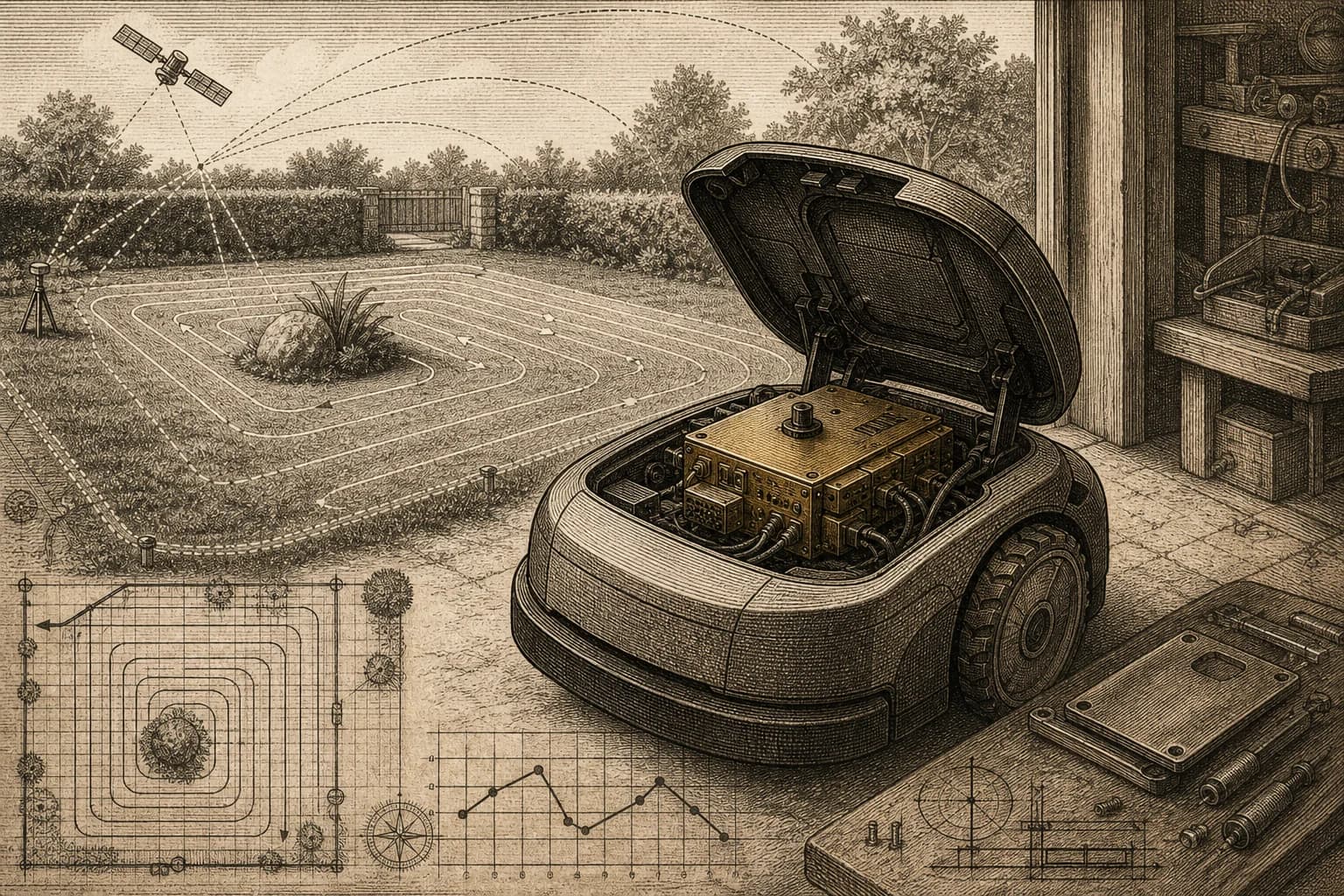
Replaces the controller in compatible low-cost robot mowers with custom open hardware and software for mapped, GPS-guided mowing without a perimeter wire.
Visit OpenMowerOriginal editorial concept art generated with built-in Codex Image Gen for The Machine Press, 2026-07-26.
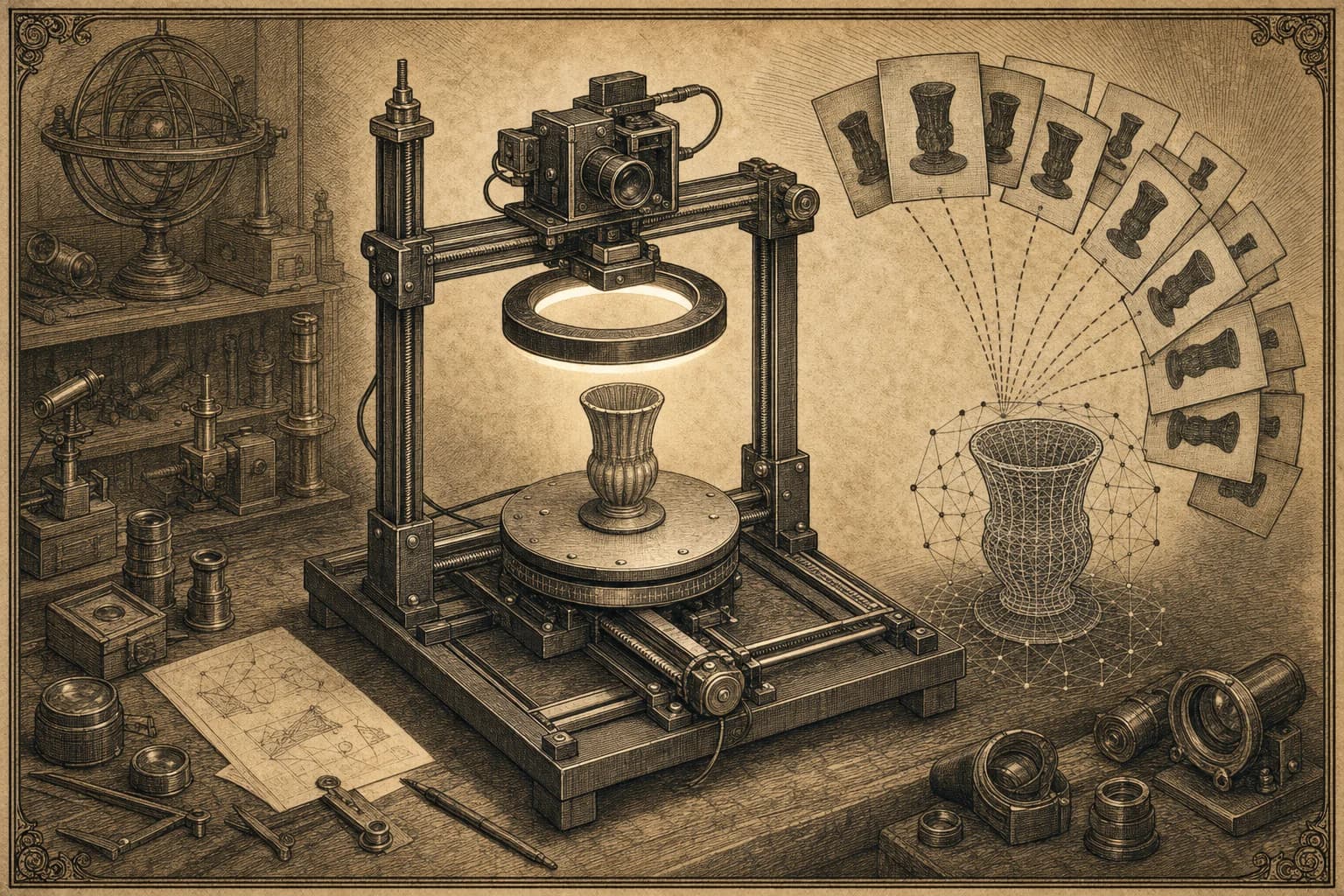
Automates repeatable photogrammetry with a Raspberry Pi-controlled camera, motors, and modular printable rigs that feed many views into a 3D reconstruction.
Visit OpenScanOriginal editorial concept art generated with built-in Codex Image Gen for The Machine Press, 2026-07-26.
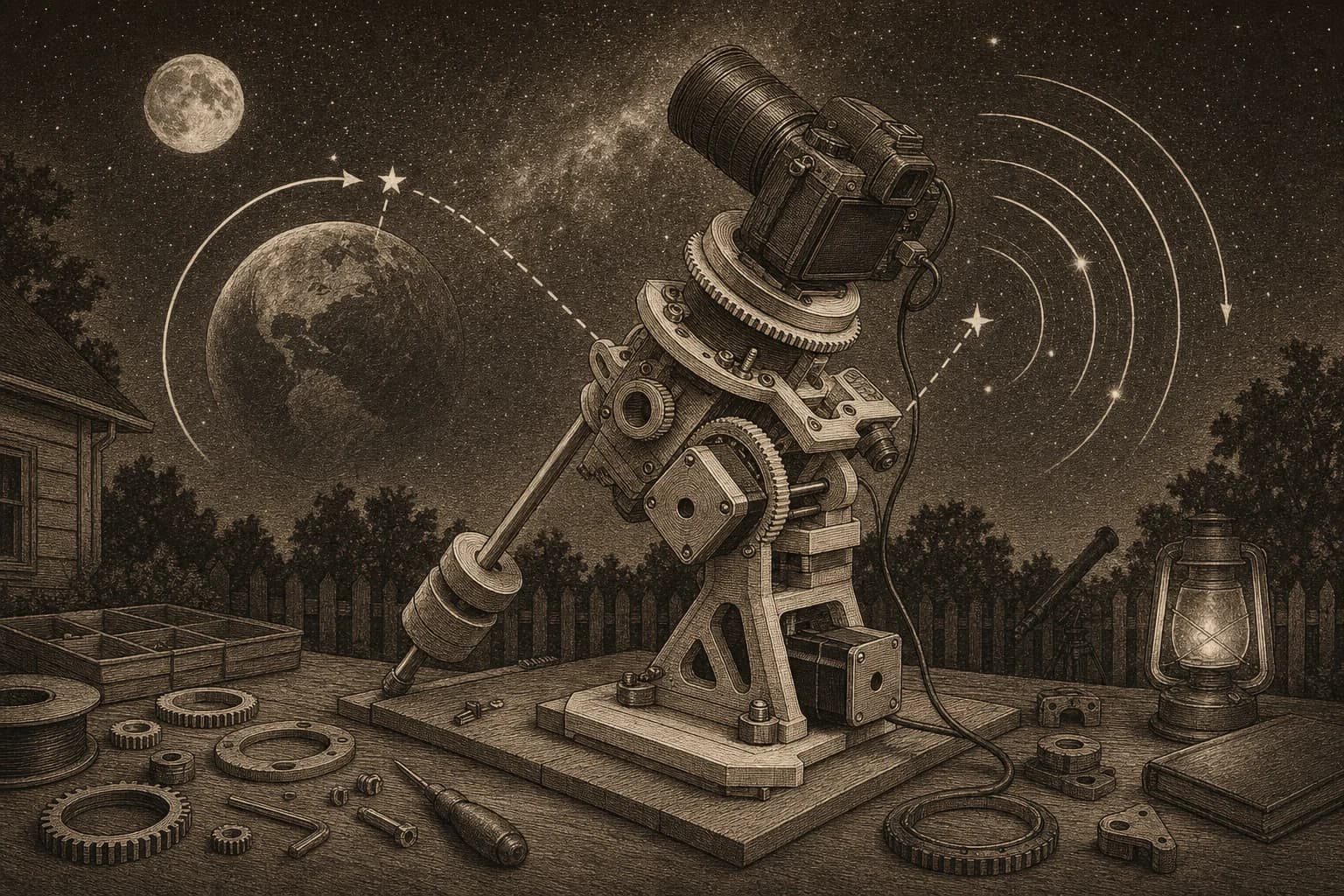
Builds an equatorial camera mount from affordable 3D-printed parts and stepper motors so the camera counters Earth's rotation for long-exposure astrophotography.
Visit OpenAstroTrackerOriginal Codex Image Gen concept art from 2026-07-10; carried forward from the validated 2026-07-25 edition.
Desk Picks are selected by the newsroom. Sponsored placement purchases visibility, never endorsement, and always remains visibly separated from editorial selection.
 Editorial illustration