Escaping helium supplied the first clear atmospheric detection on a rocky world in another star's habitable zone.
Editorial illustration
Editorial concept art of LHS 1140 b retaining and losing part of an atmosphere; it is not telescope imagery and does not depict confirmed oceans, habitability or life. Original editorial concept art generated with built-in Codex Image Gen for The Machine Press, 2026-07-30.
Astronomers used the WINERED spectrograph on the Magellan Telescope to detect helium escaping from LHS 1140 b, a rocky exoplanet about 48 light-years away. The signal supports a long-lived atmosphere around a planet in its star's habitable zone, but it does not establish an ocean, a breathable surface or life; those questions require new observations of the atmosphere's composition.
Editorial concept art contrasting a warped optical pattern with a preserved topological invariant; it is not laboratory data or an operational communications system. Original editorial concept art generated with built-in Codex Image Gen for The Machine Press, 2026-07-30.
A topological invariant carried by entangled light remained intact after turbulence destroyed the beam's recognizable shape.
A University of the Witwatersrand team sent structured quantum light through strong atmospheric turbulence and found that the visible spatial pattern and conventional entanglement signal degraded while a topological number embedded in the state remained recoverable. The Physical Review Letters experiment suggests a more resilient way to encode high-dimensional quantum information, but it is a laboratory result rather than an operational bad-weather communications network.
A new DOE-backed ASU project will use AI to search demand, weather and technology scenarios for reliability risks.
The U.S. Department of Energy's Genesis Mission selected an Arizona State University-led team to develop an AI planning system for electrical-grid resilience. The project aims to screen thousands of scenarios involving changing demand, new technology and extreme weather; it is a funded research program, not a deployed grid-control system or evidence of improved reliability.
Historical scientific-observation file image from Micrographia; it does not show human kidney tissue, IGF2, modern microscopy or the reported study. Robert Hooke / Library of Congress, Lessing J. Rosenwald Collection; public-domain 1665 engraving, converted to WebP by The Machine Press.
Human tissue mapping identified soluble signals between developing cells and singled out IGF2 as support for stem-like kidney cells.
Penn Medicine, Children's Hospital of Philadelphia and Penn Engineering researchers mapped signaling directly in developing human kidney tissue rather than inferring the process only from animals. They identified insulin-like growth factor 2 as a key signal that sustains nephron progenitor cells; the Nature Genetics work is a developmental map, not a ready regenerative treatment.
Researchers traced a nuclear-accounting blind spot through two decades of mineral extraction and exports from the Democratic Republic of the Congo.
University of Wisconsin–Madison and Princeton nuclear engineers report that uranium has been extracted, concentrated and exported through the Democratic Republic of the Congo's cobalt supply chain without declaration to the International Atomic Energy Agency. Their study identifies a safeguards gap with security implications; it is a research finding about accounting and trade flows, not an IAEA enforcement determination.
An active excavation in Burgenland uncovered Roman pottery kilns where surveys suggest roughly 100 more may remain underground.
University of Vienna archaeologists uncovered two Roman-era pottery kilns, working pits and production waste near Hannersdorf, Austria, within the first two weeks of a current teaching excavation. Geomagnetic surveys suggest a much larger complex and the finds include intact vessels and defective wares, but the estimate of about 100 buried kilns remains to be tested by excavation.
Structure-guided engineering raised the efficiency and precision of early AI-designed adenine base editors.
A Sungkyunkwan University-led team used predicted protein structures to redesign early AI-derived adenine base editors, producing OpenABE 1.1 and 1.2. The researchers report 16- to 36-fold higher activity than the starting AI-designed editors, reduced nearby off-target editing and activity in nuclear and mitochondrial DNA; the work remains preclinical and does not establish a safe human gene therapy.
Oak Ridge launched a national hub combining materials tests, public data, modeling and early production.
Oak Ridge National Laboratory and the National Laboratory of the Rockies launched the ACCENT Center to move cement and concrete materials from laboratory testing toward early commercialization. Plans include a public performance database, multiscale characterization, sensors, predictive modeling and pilot production; the launch creates infrastructure, not proof that any new binder is field-ready.
Illustrative light-transmission file image; it does not show the reported blue LED, reaction vessel, molecules, products or experimental data. Atlantic Ambience / Pexels; cropped, resized, metadata stripped, and converted to WebP by The Machine Press.
A radical-cation pathway turns a familiar carbon–halogen handle into neighboring substitutions in one operation.
Binghamton University chemists report a blue-LED-driven reaction that converts alkyl carbon–halogen synthons into products substituted at two adjacent carbon atoms. The Science paper expands a common synthetic handle and could shorten some medicinal-chemistry routes, but it is a reaction method rather than evidence that a drug candidate has been discovered or approved.
A national database rates 128 million buildings and estimates that 6.5 million residents face high exposure.
University of Washington researchers combined terrain susceptibility, building footprints, occupancy and census data into the Landslide Exposure Database. Their Earth’s Future analysis places most highly exposed residents in Appalachia and along the West Coast and finds different urban and rural vulnerability patterns; it is a prioritization tool, not a property-level prediction of when a slide will occur.
A programmable tumor-on-chip model isolated how the order of microglia and natural-killer-cell arrival changes glioblastoma response.
Sungkyunkwan University and Seoul National University researchers varied only the sequence of immune-cell exposure in a 3D glioblastoma microfluidic model. Microglia arriving first activated STAT3 and limited natural-killer-cell infiltration, while the reverse order increased IL12A and tumor suppression; the patient-derived in-vitro work suggests timing matters, but it is not a clinical treatment trial.
Generic laboratory-glassware file image; it does not show ovarian-cancer cells, a patient sample, PARP1, p300, tumor acidity or a study result. Rodolfo Clix / Pexels; cropped, resized, metadata stripped, and converted to WebP by The Machine Press.
An ERK–p300–PARP1 pathway helped ovarian-cancer models evade PARP inhibitors and offered a route to resensitization.
MD Anderson researchers found that acidic conditions activated ERK, p300 and PARP1 signaling that reduced PARP trapping and made ovarian-cancer cells less sensitive to PARP inhibitors. Blocking p300 restored drug sensitivity across preclinical models, including resistant ones; the result supports future combination studies but does not yet establish patient benefit.
Roof age, mold, flood depth and ventilation helped explain respiratory symptoms months after hurricanes.
FAMU-FSU researchers combined resident surveys, home inspections, mold sampling and flood models after Hurricanes Ida and Ian. Roof age, indoor mold spores and maximum flood depth were among the strongest factors associated with new respiratory symptoms five to seven months later, while ventilation and building tightness also mattered; the observational framework guides intervention priorities rather than proving one cause in every flooded home.
A phase III trial reported slower skeletal decline and preserved heart function in Duchenne muscular dystrophy.
Cedars-Sinai investigators report that the investigational cell therapy deramiocel preserved cardiac function and slowed muscle decline in boys and young men with Duchenne muscular dystrophy in a phase III trial published in The Lancet. The result is clinically significant, but the therapy remains investigational and the release does not substitute for regulatory review or long-term safety follow-up.
A newly described pathway links mitochondrial dysfunction, histone acetylation and inflammatory genes in senescent cells.
Mayo Clinic researchers report a mechanism by which dysfunctional mitochondria cooperate with epigenetic machinery to activate inflammatory genes in senescent cells. The Nature study connects cellular energy failure to the senescence-associated secretory phenotype and identifies a possible intervention path, but it does not show a treatment that slows human aging.
A coordinated rollout of an electronic warning score was associated with lower mortality across 11 hospitals.
RWJBarnabas Health and Rutgers evaluated 23,132 high-risk patients after implementing the Epic Deterioration Index with clinician training and automated rapid-response notifications. In-hospital mortality among the high-risk group fell from 23.1% to 18.6%, while rapid-response evaluations increased; the study credits the full workflow around the algorithm and does not isolate software as the sole cause.
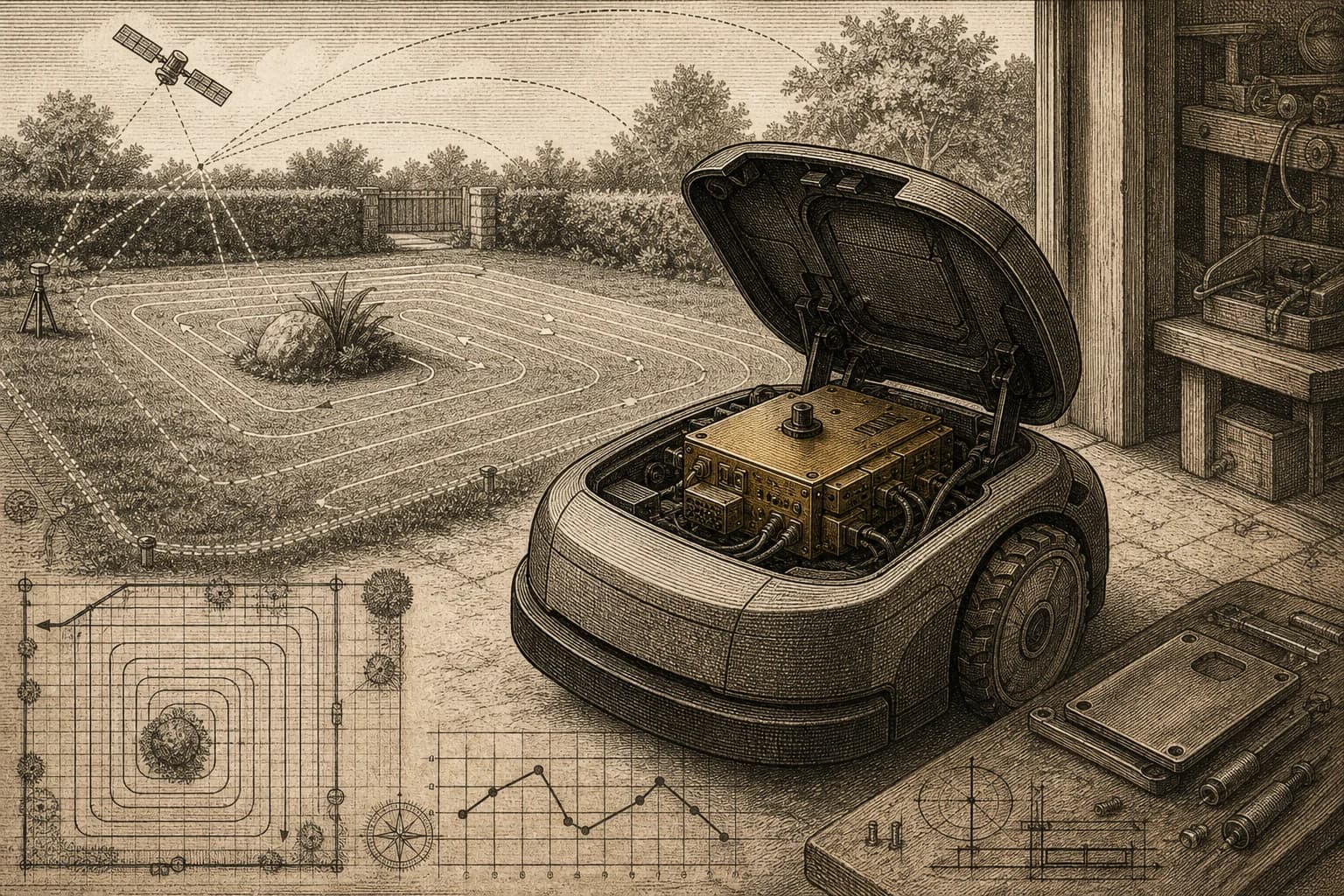
Replaces the controller in compatible low-cost robot mowers with custom open hardware and software for mapped, GPS-guided mowing without a perimeter wire.
Visit OpenMowerOriginal editorial concept art generated with built-in Codex Image Gen for The Machine Press, 2026-07-26.
Automates repeatable photogrammetry with a Raspberry Pi-controlled camera, motors, and modular printable rigs that feed many views into a 3D reconstruction.
Visit OpenScanOriginal editorial concept art generated with built-in Codex Image Gen for The Machine Press, 2026-07-26.
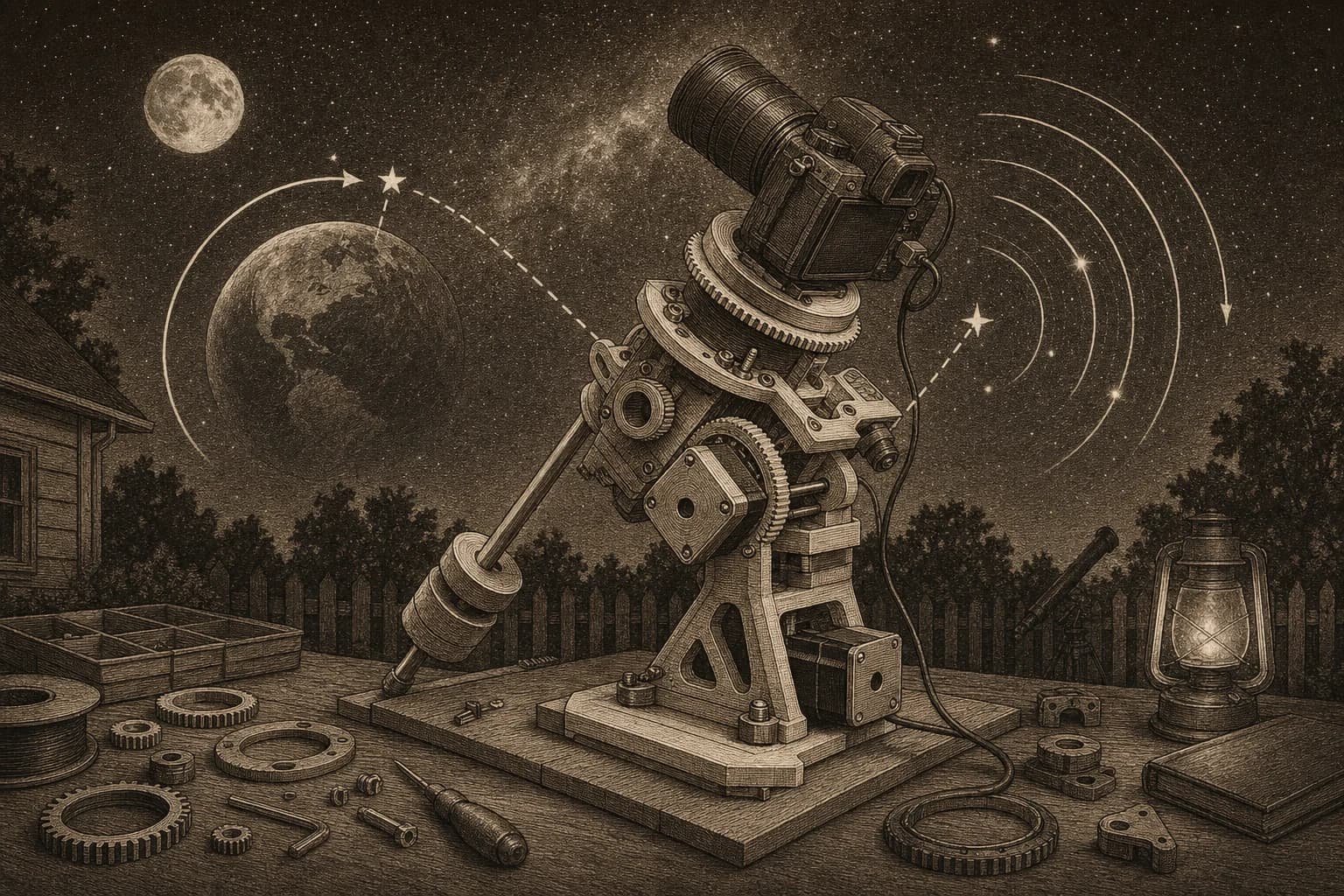
Builds an equatorial camera mount from affordable 3D-printed parts and stepper motors so the camera counters Earth's rotation for long-exposure astrophotography.
Visit OpenAstroTrackerOriginal Codex Image Gen concept art from 2026-07-10; carried forward from the validated 2026-07-25 edition.
Desk Picks are selected by the newsroom. Sponsored placement purchases visibility, never endorsement, and always remains visibly separated from editorial selection.
 Editorial illustration