research
The Atmosphere Was Leaving a Trace
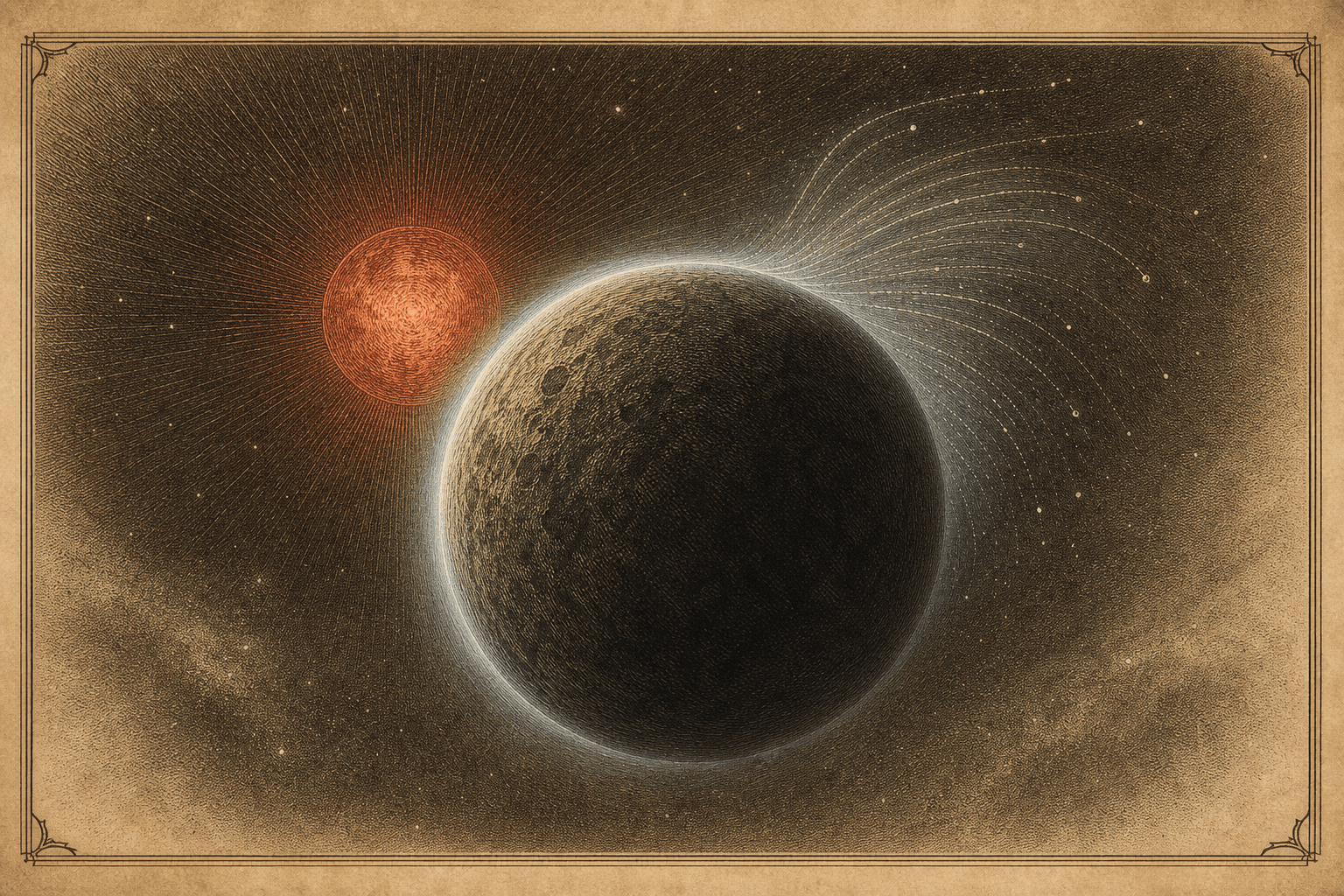
Escaping helium supplied the first clear atmospheric detection on a rocky world in another star's habitable zone.
Summary
Escaping helium supplied the first clear atmospheric detection on a rocky world in another star's habitable zone.
Astronomers used the WINERED spectrograph on the Magellan Telescope to detect helium escaping from LHS 1140 b, a rocky exoplanet about 48 light-years away. The signal supports a long-lived atmosphere around a planet in its star's habitable zone, but it does not establish an ocean, a breathable surface or life; those questions require new observations of the atmosphere's composition.
Why it matters
Escaping helium supplied the first clear atmospheric detection on a rocky world in another star's habitable zone.
Limits and context
- The signal supports a long-lived atmosphere around a planet in its star's habitable zone, but it does not establish an ocean, a breathable surface or life; those questions require new observations of the atmosphere's composition.
Key claims
Escaping helium supplied the first clear atmospheric detection on a rocky world in another star's habitable zone.
Qualification: The signal supports a long-lived atmosphere around a planet in its star's habitable zone, but it does not establish an ocean, a breathable surface or life; those questions require new observations of the atmosphere's composition.
Evidence: source-2026-07-30-001
Sources
- Center for Astrophysics | Harvard & Smithsonian via Newswise: First atmosphere on a habitable-zone rocky worldCenter for Astrophysics | Harvard & Smithsonian · secondary reporting
Corrections
No corrections have been recorded for this story.