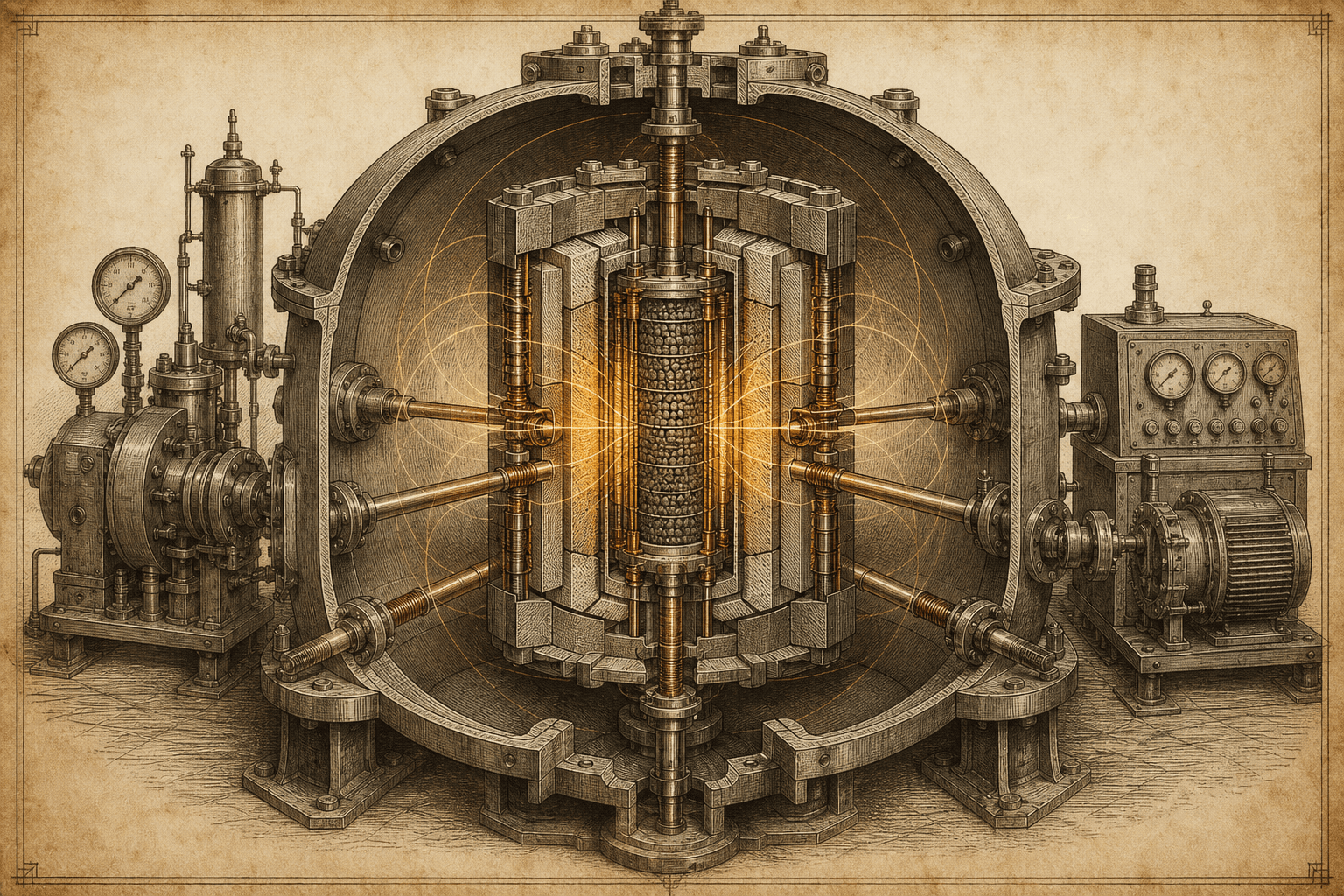
Los Alamos brought a compact reactor core to sustained criticality above 800 C while deliberately keeping the experiment at zero power.
Editorial illustration
Editorial concept art of the ZiaCore zero-power criticality experiment; it is not a photograph and does not depict electricity generation, a commercial reactor or an accident. Original editorial concept art generated with built-in Codex Image Gen for The Machine Press, 2026-07-31.
Los Alamos National Laboratory brought its ZiaCore microreactor experiment to criticality at the National Criticality Experiments Research Center in Nevada after tests in April and May. The low-enriched uranium-dioxide core, zirconium-hydride moderator and heat-pipe design sustained a chain reaction above 800 C, but operators stopped before measurable fission heat was produced. The result is a proof-of-principle physics demonstration, not a power-generating reactor or commercial deployment.
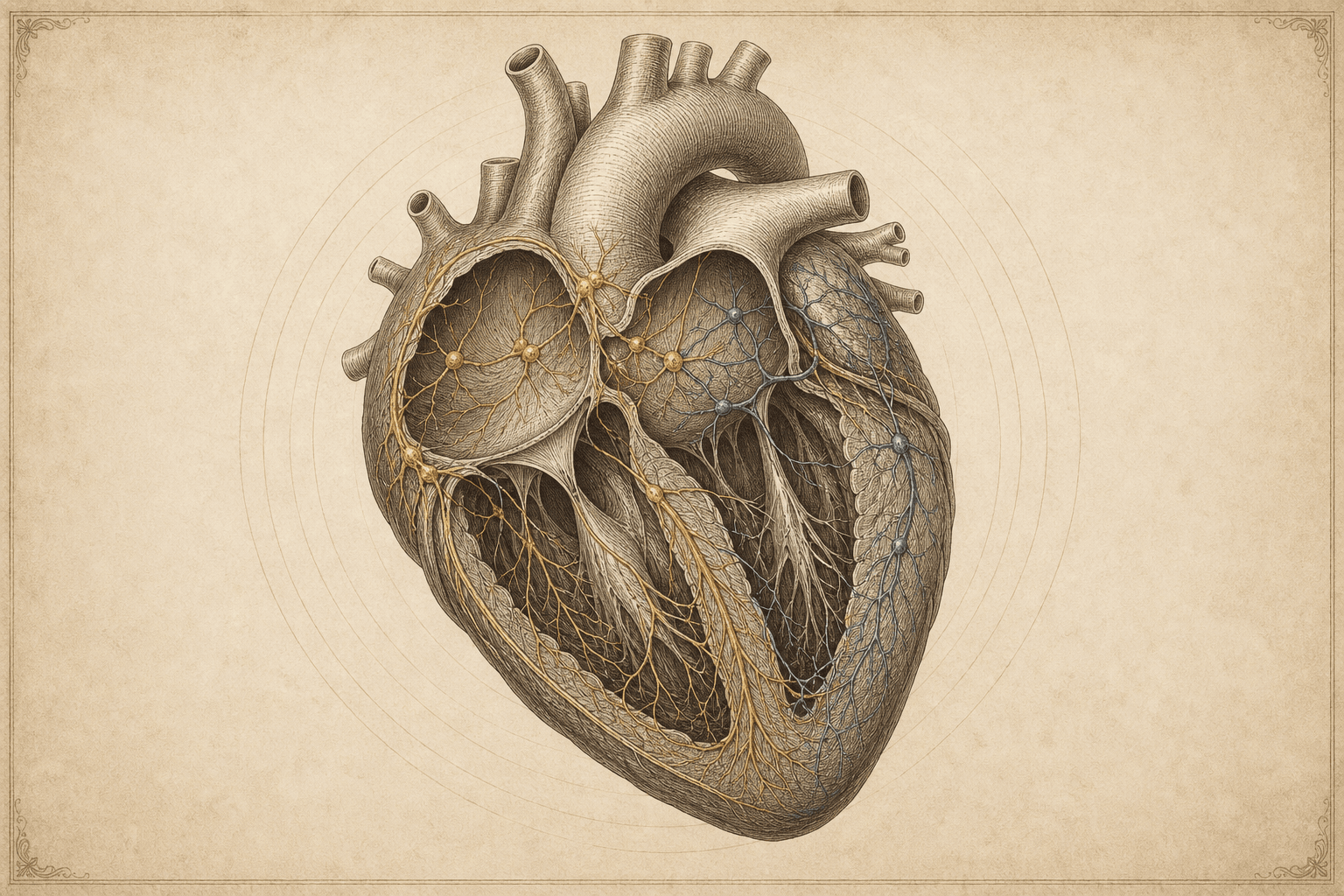
Editorial concept art of two intrinsic cardiac-neuron populations identified in mouse experiments; it is not human clinical imagery or a treatment diagram. Original editorial concept art generated with built-in Codex Image Gen for The Machine Press, 2026-07-31.
Mouse experiments separated two tiny cardiac-neuron populations: one sustaining baseline rhythm, the other coordinating the response to stress.
Yale researchers identified two major populations in the heart's intrinsic neural network. Removing Npy-positive neurons caused mouse hearts to stop, while Ddah1-positive neurons proved important when the animals faced physiological stress. Together the cells make up less than 0.01% of heart tissue. The Cell study establishes distinct functions in mice; it does not yet show that manipulating these neurons is a safe treatment in people.
The University of Chicago professor received a Fields Medal for putting difficult laws of physics on rigorous mathematical ground.
University of Chicago professor Yu Deng received a Fields Medal for work that builds rigorous mathematical foundations beneath problems arising in physics. The International Mathematical Union awards the medal every four years to mathematicians under 40. Deng's recognition is the new event; the award citation does not mean the underlying physical systems are now fully solved.
Generic server-hardware file image; it does not show Vera, Mission, Vision, Los Alamos equipment or measured performance. panumas nikhomkhai / Pexels; cropped, resized, metadata stripped, and converted to WebP by The Machine Press.
Los Alamos is testing the Vera CPU platform that will anchor Mission and Vision before the full systems arrive in 2027 and 2028.
Los Alamos National Laboratory says its first Vera CPU server testbed will arrive this summer as part of the codesign work behind the Mission and Vision supercomputers. The lab reports more than three times the per-CPU performance of Crossroads and more memory per core, while Vision's Rubin GPUs are expected to accelerate AI workloads. Those figures are laboratory and vendor projections; the complete systems are not yet operational.
A chlorella-and-starch formulation let researchers adjust flow, elasticity and shape retention for customized medi-foods.
Korea Institute of Science and Technology researchers combined golden chlorella with corn, potato and tapioca starches to make a 3D-printable food whose viscosity and elasticity can be tuned for people with swallowing difficulties. The team reports stable printed shapes and controllable texture. Further development and clinical evaluation are still required, so the formulation is not yet an established dysphagia treatment.
The most complete zhelestid fossil yet moved the group away from placental mammals and onto a shrew-like branch.
A Nature study describes Tamirkhan balcarceli, a 6- to 7-inch mammal found in Mongolia's Gobi Desert and represented by a skull and partial skeleton. Its teeth resemble those that had linked zhelestids to placental mammals, but its skull, incisors, legs and ankles place it among zalambdalestoids instead. The result shows how convergent tooth shapes can mislead classifications based on fragments.
Adelaide researchers are testing black soldier fly larvae as a human food grown on agricultural by-products.
Adelaide University researchers raised black soldier fly larvae on agricultural waste and report early nutritional results showing protein levels comparable with meat alongside omega-3 and omega-6 fats. The work aims to develop a lower-waste food source, but safety, contaminant and consumer-acceptance studies remain underway. The larvae are not yet being presented as a ready commercial human food.
Fossils in southern Mexico extend north-south mammal movement millions of years before the classic continental interchange.
Florida State University researchers report fossil evidence that mammals from North and South America were mingling before the Isthmus of Panama fully connected the continents. Smaller species appear farther south about 7 million years ago, and the broader exchange began at least 4 million years before the conventional Great American Biotic Interchange date. The routes may have involved island hopping or rafting rather than a continuous land bridge.
Conceptual Visualising AI file image about neuroscience-inspired computation; it is not a brain scan, immune assay, patient record or result from the reported study. Novoto Studio / Google DeepMind / Pexels; cropped, resized, metadata stripped, and converted to WebP by The Machine Press.
Exploratory data tied IL-15, IL-7 and B-cell signaling to response patterns after rapid-acting depression therapies.
MD Anderson researchers found that participants who responded to rapid-acting antidepressant therapies entered treatment with lower IL-15 activity and higher B-cell signaling, with some patterns reversing afterward. The Molecular Psychiatry analysis points to immune pathways that may help explain variable responses to ketamine and psychedelic-assisted interventions. The signals are exploratory biomarkers and require larger prospective validation.
Junior researchers reconstructed senior scientists' work to preserve false starts and choices polished papers leave out.
A University of Pittsburgh-led team reports seven 'inverseminars' held over 27 months: a junior researcher presents a senior scientist's work back to them, prompting discussion of abandoned paths, practical decisions and tacit knowledge. The Nature Physics paper describes how the sessions can receive persistent identifiers through inverseminars.org, turning oral research history into citable material.
Adding 10-HSA to antiretroviral therapy improved viral clearance and intestinal repair in a nonhuman-primate model.
UC Davis researchers tested 10-hydroxy-cis-12-octadecenoic acid, a metabolite associated with Lactobacillus plantarum, alongside antiretroviral therapy in nonhuman primates with SIV. The combination accelerated viral clearance and improved measures of gut-barrier repair compared with therapy alone. The result is preclinical, a patent has been filed and no human HIV benefit has yet been established.
The open-source PyRET package predicts how tiny flaws in solids exchange energy from first principles.
Argonne National Laboratory and University of Chicago researchers released PyRET, an open-source Python package for predicting resonance energy transfer between defects in solid materials. The tool connects first-principles calculations with longer-scale energy migration, helping researchers evaluate optical-memory, quantum and microelectronic materials. It is a modeling package, not proof that a particular device will meet performance targets.
A 55-person study found strong agreement between a color-changing wearable test and standard cystic-fibrosis measurements.
Northwestern and Lurie Children's researchers tested a two-sticker system that collects sweat, changes color with chloride concentration and is read by a smartphone in under an hour. Among 55 participants, including 52 with cystic fibrosis or related conditions, results closely tracked standard testing. The small study needs multicenter validation in younger infants and regulatory review before clinical adoption.
Generic laboratory-glassware file image; it does not show a BRCA test, patient sample, cancer tissue, family history or study result. Rodolfo Clix / Pexels; cropped, resized, metadata stripped, and converted to WebP by The Machine Press.
Ontario records placed lifetime breast-cancer risk near 25% for referred women without a pathogenic BRCA result.
Cedars-Sinai researchers analyzed records for nearly 16,000 Ontario women tested between 2007 and 2016. In this referred, family-history-enriched group, those without a pathogenic BRCA1 or BRCA2 result still had an estimated 25% lifetime breast-cancer risk, while women with variants of uncertain significance were near 30%. The observational study supports risk assessment beyond a binary genetic result; it does not apply the same estimate to every person with a negative test.
The first U.S. pilot in severe treatment-resistant military PTSD reported no serious adverse events and substantial short-term remission.
Ohio State researchers enrolled 12 veterans with severe, treatment-resistant PTSD in a psilocybin-assisted therapy pilot. The team reported no serious adverse events or increase in suicidality, and nine participants met remission criteria one month after treatment. With no control group and a very small sample, the study establishes feasibility and a signal for larger trials, not treatment efficacy for the broader veteran population.
DOE selected projects spanning AI-enabled science, simulations and experimental infrastructure for its integrated discovery platform.
Seven Los Alamos National Laboratory projects have been selected for funding under the Department of Energy's Genesis Mission. The awards will contribute tools and research to an integrated science platform intended to combine computing, models, data and experiments. Selection and funding are the event; the announcement does not establish that the proposed capabilities are complete or that their scientific goals have been achieved.
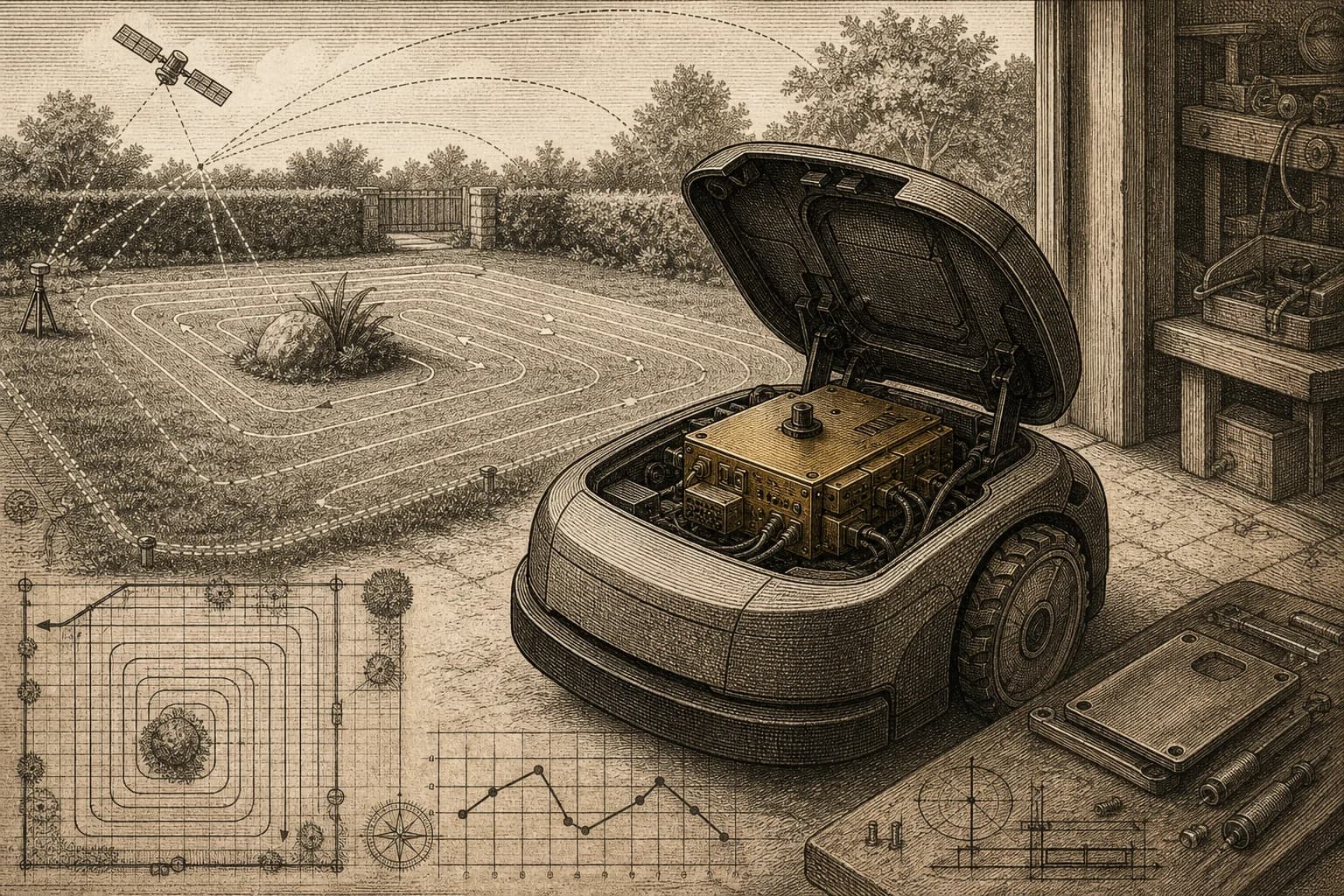
Replaces the controller in compatible low-cost robot mowers with custom open hardware and software for mapped, GPS-guided mowing without a perimeter wire.
Visit OpenMowerOriginal editorial concept art generated with built-in Codex Image Gen for The Machine Press, 2026-07-26.
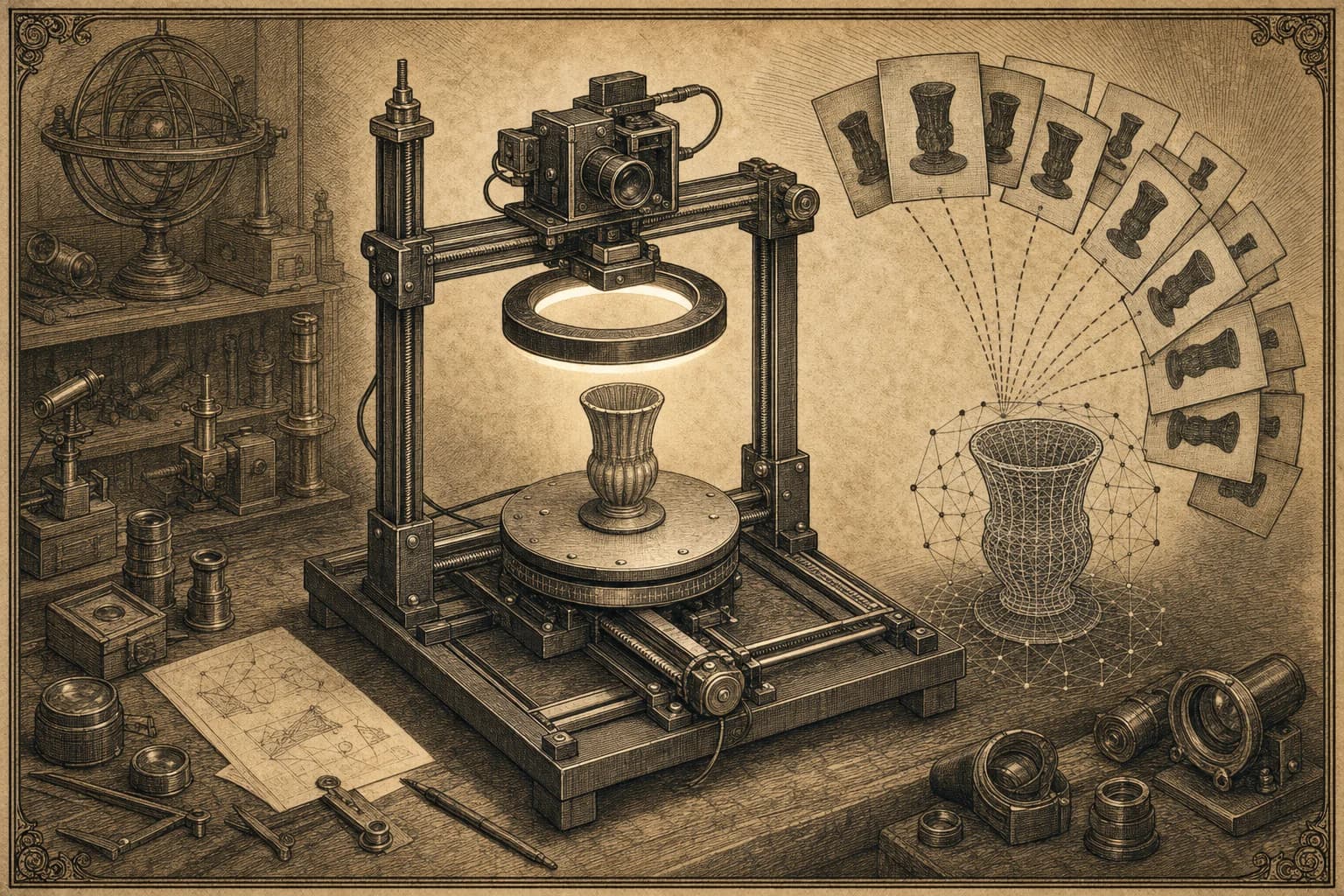
Automates repeatable photogrammetry with a Raspberry Pi-controlled camera, motors, and modular printable rigs that feed many views into a 3D reconstruction.
Visit OpenScanOriginal editorial concept art generated with built-in Codex Image Gen for The Machine Press, 2026-07-26.
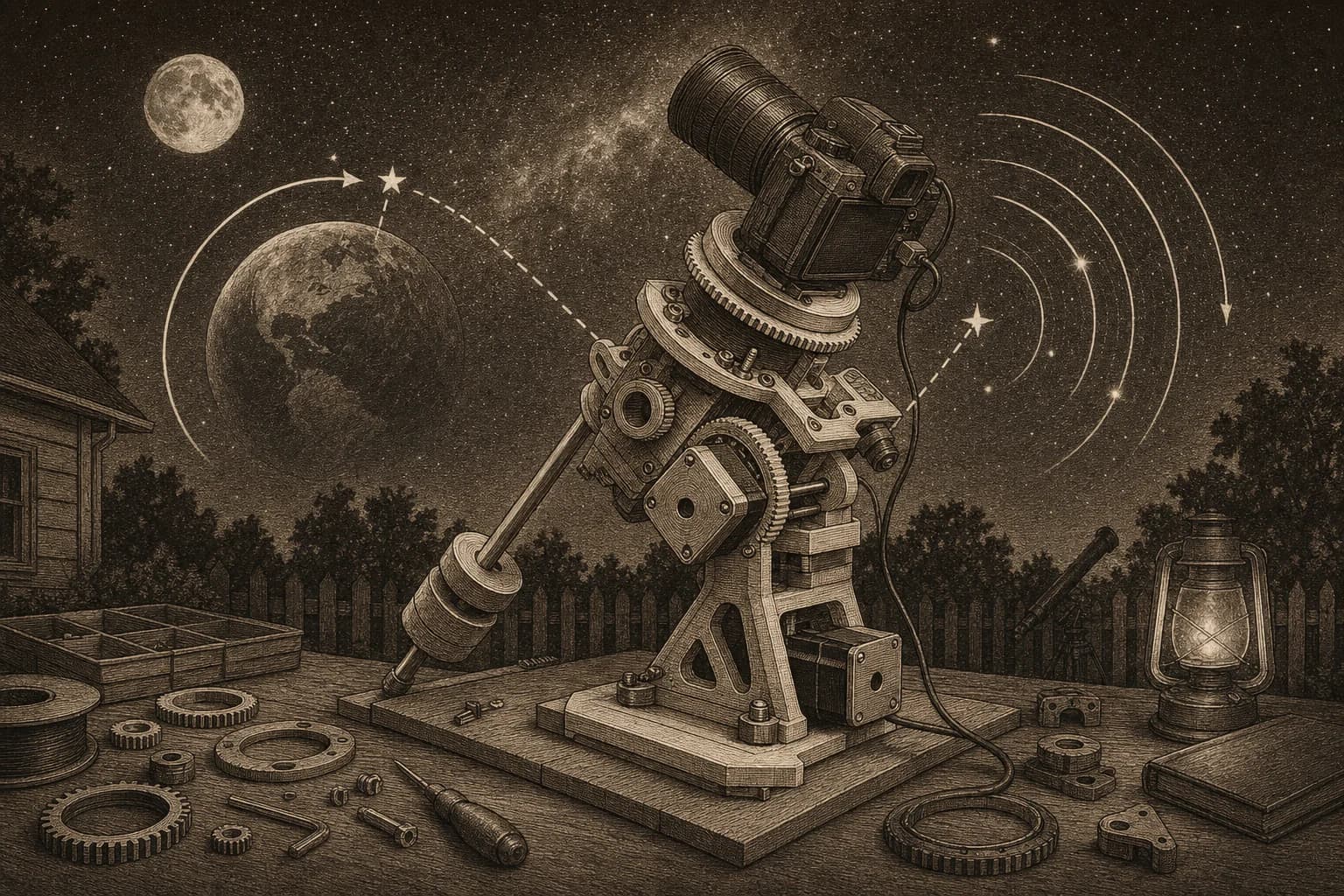
Builds an equatorial camera mount from affordable 3D-printed parts and stepper motors so the camera counters Earth's rotation for long-exposure astrophotography.
Visit OpenAstroTrackerOriginal Codex Image Gen concept art from 2026-07-10; carried forward from the validated 2026-07-25 edition.
Desk Picks are selected by the newsroom. Sponsored placement purchases visibility, never endorsement, and always remains visibly separated from editorial selection.
 Editorial illustration