Rollout-based advantage tests found that language-model judges could identify consequential chain-of-thought steps better than chance—but far below the experiment's noise ceiling.
Editorial illustration
Concept illustration contrasting a readable reasoning trace with hidden measured influence; it is not a model diagram, experiment apparatus or literal chain of thought. Original editorial illustration generated with built-in Codex Image Gen for The Machine Press, 2026-09-06.
Researchers estimated each reasoning step's functional importance by measuring how much including it changed the expected final reward across Monte Carlo continuations. Capable language models beat a prevalence baseline when asked to identify high-advantage steps from the text alone, yet remained well short of the noise ceiling. Fine-tuning a step critic helped more on wrong answers than correct ones. The result does not show that reasoning text is useless; it shows that readable prose only partially reveals which step actually carries the answer. That distinction matters when traces are used for error diagnosis, process rewards or claims of interpretability.
Concept illustration of repeated feedback refining a working standard; it does not reproduce the study's interface, participants or generated artifacts. Original editorial illustration generated with built-in Codex Image Gen for The Machine Press, 2026-09-06.
Repeated feedback across writing and visual tasks became personal context, weight updates and an evolving rubric—then improved solo work after only tens of examples.
The TAHI system treats iterative human-agent work as training data for the individual rather than another sample of population preference. Across 600 writing and visual-creation tasks for 30 people, the authors report solo-task success gains of 4.5 to 20.9 percent after tens of tasks. An evolving rubric captured 16.0 to 22.3 percent more failures than rubrics produced by language models or people alone, and some improvements transferred across users by up to 8.8 percent. These results belong to the study's participants, domains and evaluation setup; they do not establish universal personalization or eliminate the need for human review.
The Ecma-standardized NLIP defines a semantic message layer that can travel over HTTP, WebSocket or AMQP while adapting to other agent protocols.
NLIP wraps interaction in a common application-layer message model rather than replacing transports or every tool protocol. The paper describes bindings, security considerations, a reference implementation, representative applications and early adoption signals, plus its relationship to MCP and A2A. Standardization gives implementers a shared specification; it does not prove broad deployment, automatic semantic agreement or secure behavior by every conforming agent.
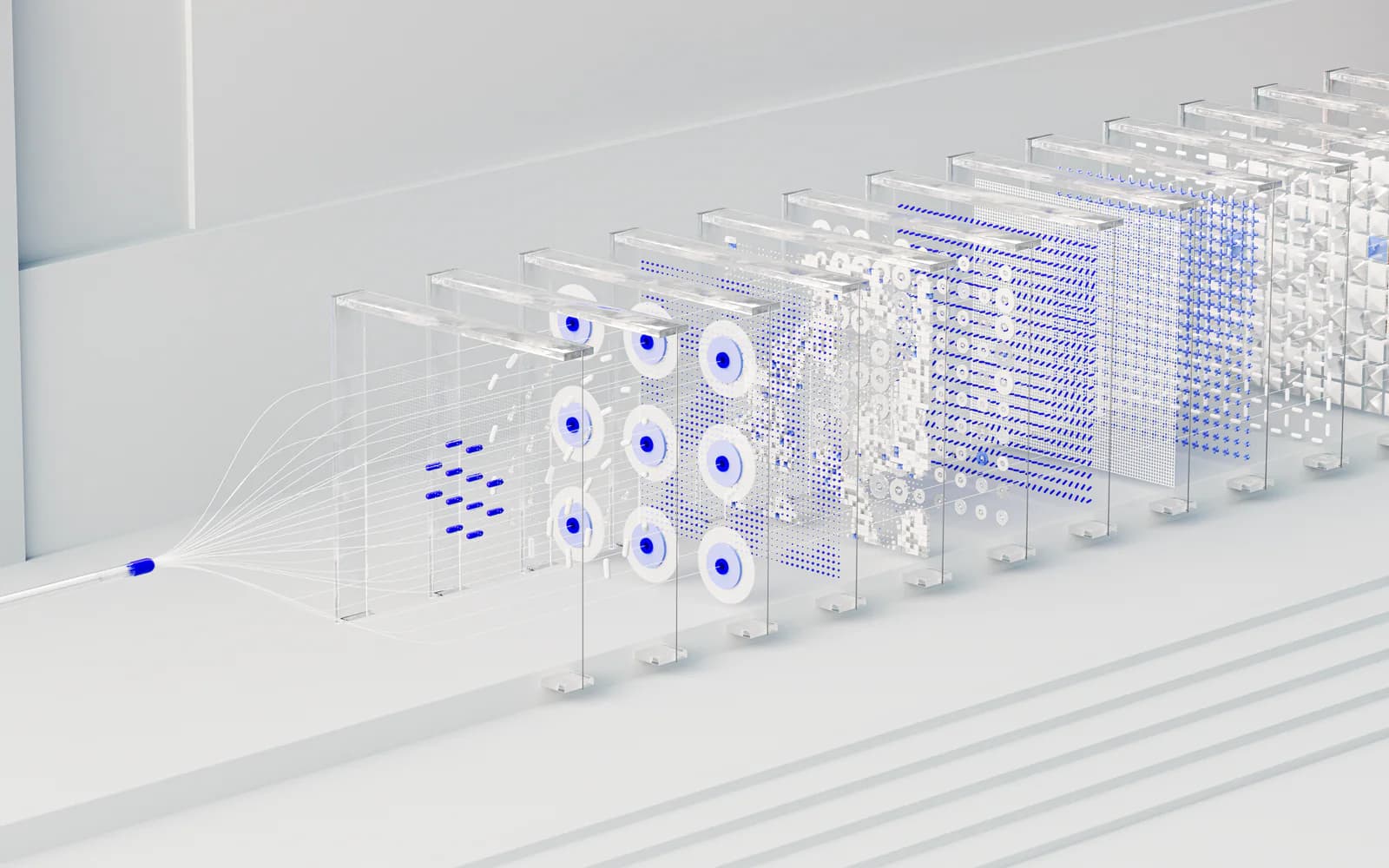
Conceptual Visualising AI artwork inspired by neural networks; it is not the S3T architecture, training clip or benchmark result. Novoto Studio / Google DeepMind / Pexels; cropped, resized, metadata stripped, and converted to WebP by The Machine Press.
A model used denser temporal sampling as its own teacher, improving state tracking without labels, a separate teacher or added inference cost.
S3T gives the same model a dense view of a clip as privileged training information and asks a sparse-view student to match its next-token distribution. On LLaVA-OneVision-2-8B, the authors report VSTAT gains from 1.74 to 2.70 points depending on configuration. Training on unlabeled synthetic clips also transferred to real video, adding 7.95 points on VSTAT-YouTube and 4.50 on MVBench Action Count. Those gains are benchmark results for the tested model, not proof of general video understanding.
Scal3R froze the geometry backbone, added multi-reference pose tokens and cut average trajectory error by more than 60 percent on KITTI.
Long online reconstructions often collapse because every pose is extrapolated from the first frame even when per-frame depth remains stable. Scal3R adds lightweight tokens—about one percent of the model's parameters—to query pose against multiple past keyframes, then closes loops with online pose-graph optimization. The authors report convergence in eight hours on one GPU and state-of-the-art results across six evaluated datasets. The evidence concerns benchmark reconstruction, not safety certification for deployed navigation.
ESPO clustered errors before proposing diverse fixes, then used bootstrap stability to keep prompt search from rewarding brittle gains.
Across seven public NLP benchmarks, ESPO averaged 74.67 percent accuracy against 70.91 percent for GEPA while producing prompts of 1,004 rather than 1,878 characters. The method separates diagnosis, four proposal strategies and a stability-based selection stage. An ablation found that adding diversity without bootstrap selection reduced performance by 1.20 points. Cross-model gains were reported on four additional students, but the large per-task variation means the average should not be treated as a universal prompt-optimization guarantee.
Puffin-World represents gravity and latitude, geometry and imagery inside one multimodal generator instead of handing 3D state to offline modules.
The architecture jointly models physical state, depth and appearance with a shared camera representation, then propagates dynamics into future frames. Its training collection contains 15 million vision-language-camera triplets and one million motion trajectories. The team also reports closed-loop exploration demonstrations and released code, models and datasets. The paper presents a research system and benchmark evidence; it does not establish physically reliable simulation for safety-critical decisions.
EditVid combines sparse causal memory, token correspondence and latent blending for instruction- and reference-guided edits.
The framework supports style transfer, attribute changes, object insertion, part edits and subject replacement without task-specific training. On FiVE, the authors report 78.16 FiVE-Acc versus 58.95 for the strongest evaluated training-free baseline, with competitive IVEBench results. A user study preferred EditVid overall in 51.8 percent of comparisons against seven methods. Those numbers reflect the chosen benchmarks and comparisons, not a blanket claim of identity-safe or artifact-free editing.
Illustrative CSS code-screen file image; it is not output from the declarative-UI system, its component catalog or a measured result. Pixabay / Pexels; cropped, resized, metadata stripped, and converted to WebP by The Machine Press.
Catalog-conditioned fine-tuning reached roughly 98 percent of teacher semantic quality and 97 percent of visual quality at far lower reported cost.
The study evaluates declarative interface generation, where a model selects approved components and binds data rather than writing arbitrary frontend code. Across two React and TypeScript domains, the 4B student retained nearly all measured teacher quality at more than an order of magnitude lower cost. Perturbed-catalog and constrained-ground-truth training each improved the quality-cost frontier in different ways. The result is specific to the tested component catalogs, domains, checkpoints and scoring system.
With a fixed token budget, reformulations beat spending the same tokens on simple document repetition—even for factual recall.
Controlled pretraining experiments found that repetition remained necessary, but reallocating some repeated tokens to auxiliary representations improved knowledge acquisition. Paraphrases helped under smaller batches, while contextual and foundational views aided learning when prior knowledge was missing. The effect did not depend on a stronger teacher generating the reformulation. The experiments isolate learning mechanisms under controlled conditions and do not prove that every synthetic rewrite improves a production corpus.
Probabilistic Causal Impact turns blame and credit into a Monte Carlo estimation problem over an explicit causal model.
PCI combines ideas from actual causality and probabilities of necessity and sufficiency while letting users define candidate explanations, counterfactual values and scores. The authors test consistency against exact causal verdicts, scale the method in synthetic systems and apply it to a deployed causal model trained on millions of points. The framework produces graded, causally structured explanations rather than feature attribution alone. Results still depend on the assumed causal graph and counterfactual distributions; computation cannot repair a misspecified model.
A live, peer-reviewed dataset pairs difficult multimodal translations with handcrafted rules that say exactly what failure looks like.
The Last Translation Benchmark starts from human-authored examples that defeat leading systems rather than a static set approaching saturation. Each text, image, audio or video case includes verification rules for concrete errors, aiming to make evaluation more reproducible and actionable than a single automatic score. Version one includes accepted contributions before September 1 and is designed to keep growing. Its value will depend on contribution quality, coverage and sustained review; it is not itself evidence that translation progress has stopped.
On-policy distillation kept improving for hundreds of steps even when the student repeatedly learned from a single prompt.
A single query's rollouts visited 71.5 percent of the states reached by full-data training, mostly within the first 100 steps. Sixteen semantically diverse queries reached 98.9 percent coverage and matched full-data gains, while content-light and off-domain prompts approached the real-query baseline. The authors argue that on-policy distillation is data-overfed but algorithm-starved: rollouts expose broad supervision quickly, then alignment absorbs it slowly. The finding is bounded to the tested tasks, teachers and model families.
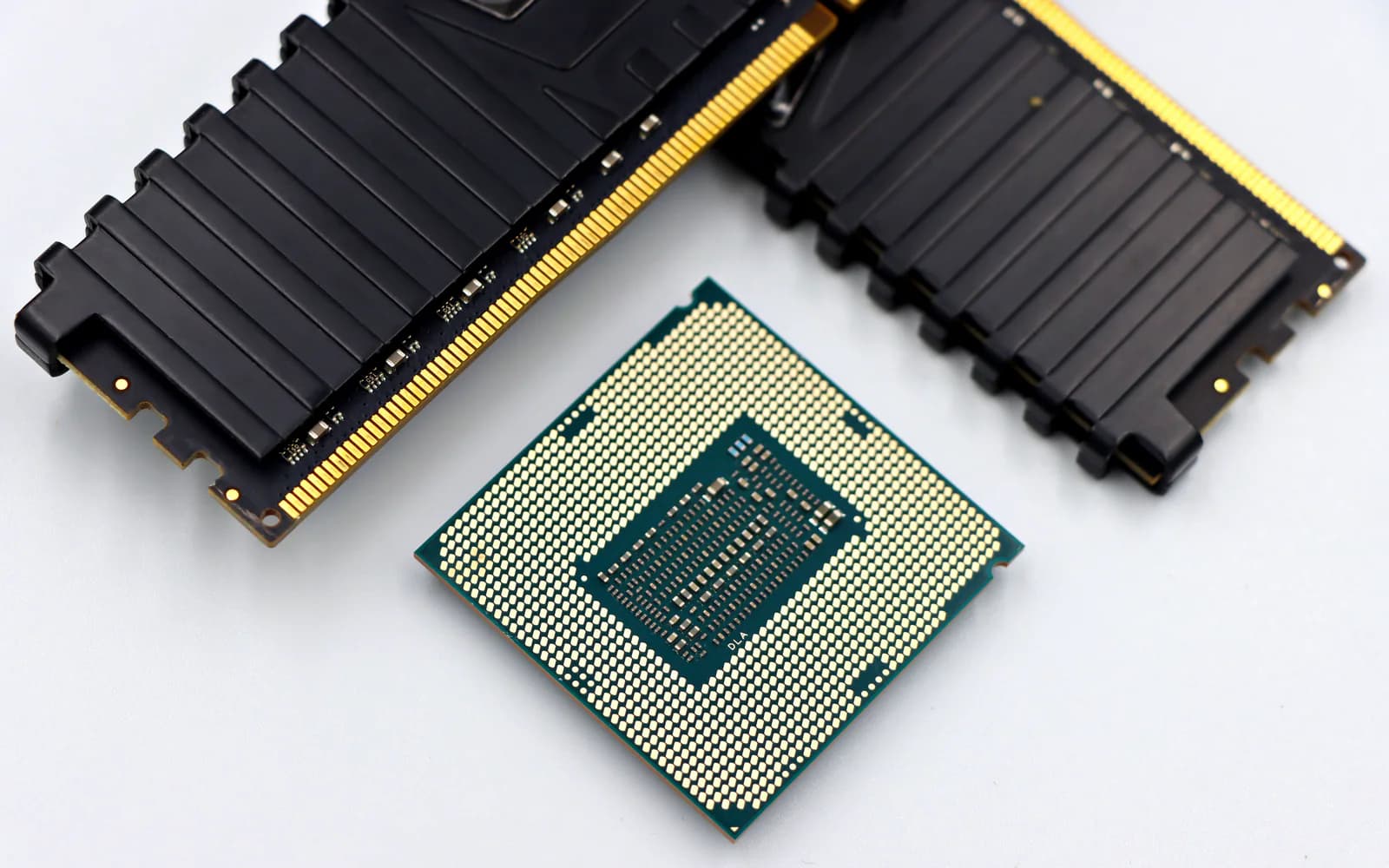
Generic computer-component file image; it does not show either evaluated SoC, the Para-Pipe mapping or a benchmark measurement. Marta Branco / Pexels; cropped, resized, metadata stripped, and converted to WebP by The Machine Press.
Para-Pipe maps operator concurrency within and across stages, producing Pareto choices for latency, throughput and energy on heterogeneous SoCs.
The framework searches how a neural graph should share work across big and little CPU cores, a GPU, DSPs and a dedicated accelerator. On one Amlogic system, throughput-optimized configurations improved average energy efficiency by 11.0 percent over pure pipelining and 23.3 percent over non-pipelined parallel execution. A second automotive-class platform supplied another heterogeneous test. These are measurements on the authors' graphs and devices, not general efficiency guarantees for all edge workloads.
A reduction from Hamiltonian paths closes the complexity question for exact synthesis with labeled qubits, all-to-all links and no ancillas.
Earlier hardness proofs needed restricted connectivity, encoded inputs or extra intermediate variables. The new proof uses recorder qubits to force required intermediate visits into the final parity transformation, reducing a grid-graph Hamiltonian path to the vanilla synthesis problem. The decision form is NP-complete and optimization is NP-hard, with consequences for related shortest-word, Cayley-graph distance and XOR-program problems. Complexity hardness describes worst-case computation; it does not say useful circuits cannot be optimized in practice.
A benchmark separates fidelity from polish across generation, editing, restoration and multi-subject scenes, then tests identity as persistent knowledge.
The study compares identity supplied in prompt context, encoded in subject-specific parameters and maintained through a persistent identity layer. Drift worsened during repeated edits, at small subject scales, under severe restoration and when several subjects shared a scene. The persistent representation improved identity scores across tested foundation models while preserving comparable instruction adherence and perceptual quality. The benchmark is produced alongside one of the compared approaches, so the result should be read as reported evaluation rather than neutral product certification.
BuilderTorbjørn Ludvigsen (tobben) and Hangprinter contributors
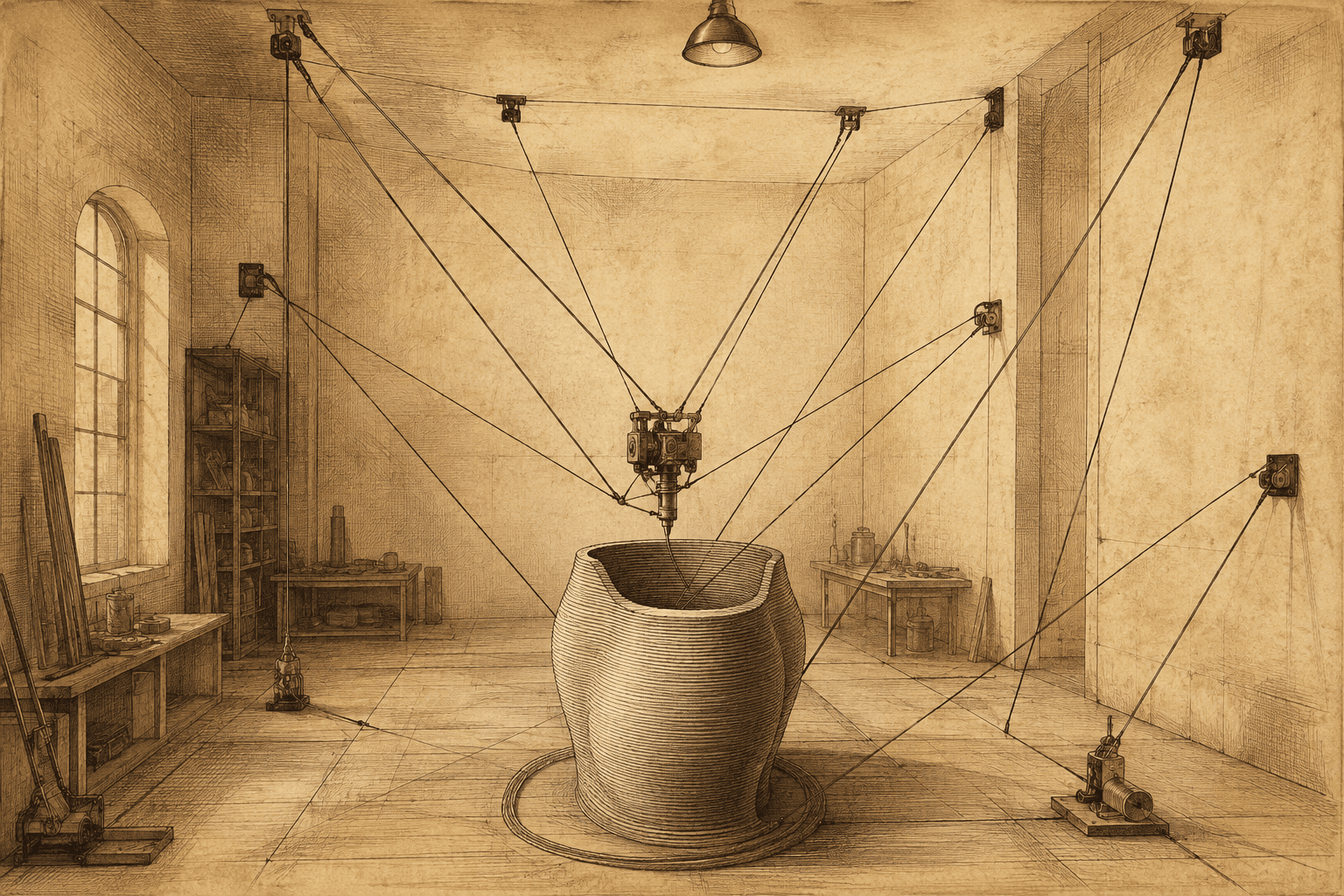
Suspends a print head from tensioned lines anchored around a room, replacing a rigid gantry with cable geometry so an open RepRap can work across an unusually large build space.
Visit HangprinterOriginal editorial concept art generated with built-in Codex Image Gen for The Machine Press, 2026-09-06.
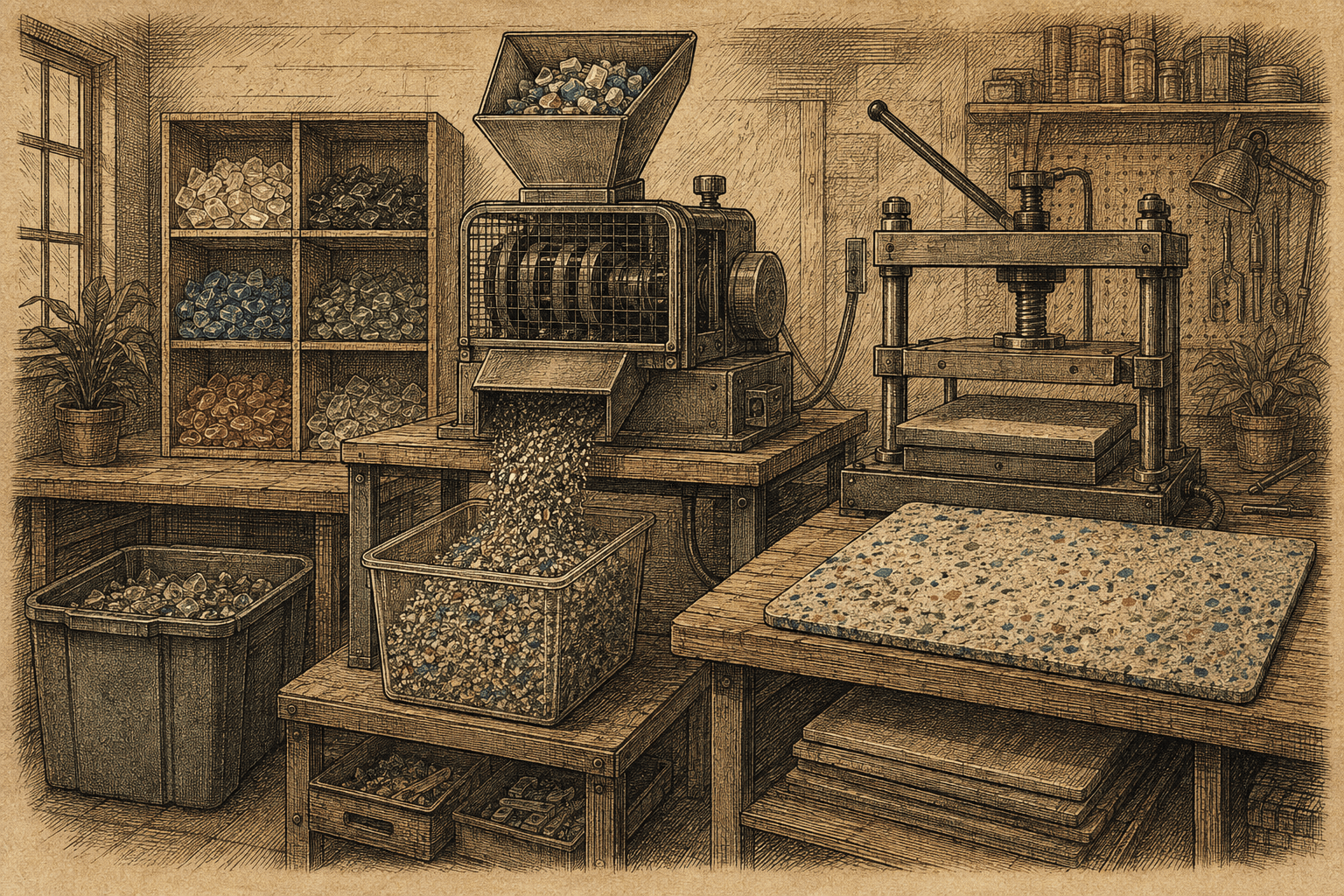
BuilderDave Hakkens and Precious Plastic contributors
Publishes replicable shredders, presses, workspace plans, and shared know-how so small local teams can sort waste plastic and turn it into reusable flakes and sheet material.
Visit Precious PlasticOriginal editorial concept art generated with built-in Codex Image Gen for The Machine Press, 2026-09-06.
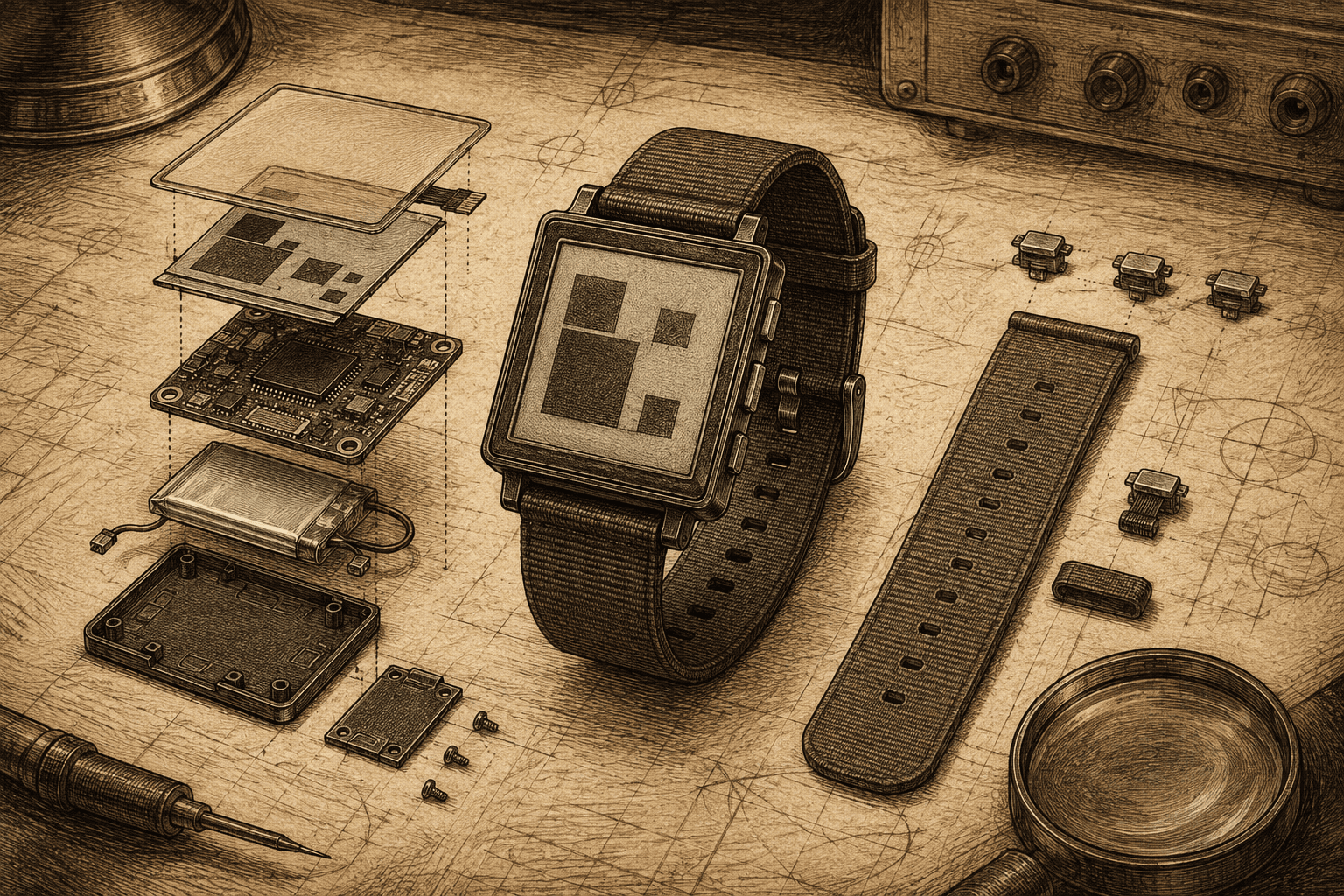
Pairs a square e-paper display with an ESP32-S3 and publishes the hardware, software, documentation, and case files so owners can build and program their own watch faces.
Visit WatchyOriginal editorial concept art generated with built-in Codex Image Gen for The Machine Press, 2026-09-06.
Turns a desktop trackball into an inspectable kit by publishing its mechanical and electrical design files, assembly documentation, and programmable QMK firmware.
Visit Ploopy Classic 2Original Codex Image Gen concept art from 2026-07-10; carried forward from the validated September 5 edition.
Desk Picks are selected by the newsroom. Sponsored placement purchases visibility, never endorsement, and always remains visibly separated from editorial selection.
 Editorial illustration