infrastructure
The Wing Broke Only After the Model Said It Should
NASA's first representative composite truss-braced wing test matched predicted flight loads and failed at roughly 127 percent of its design limit.
Summary
NASA's first representative composite truss-braced wing test matched predicted flight loads and failed at roughly 127 percent of its design limit.
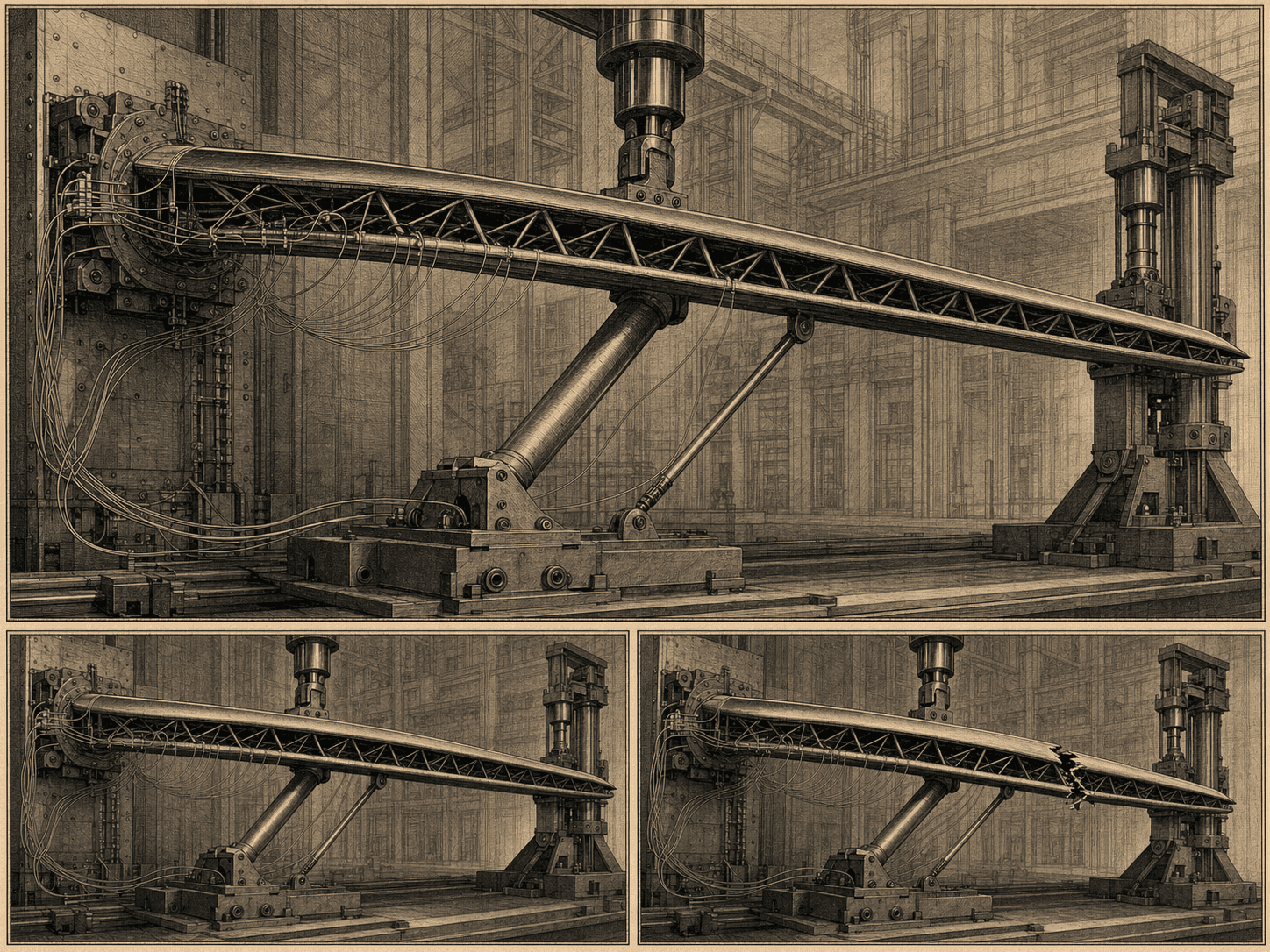
NASA bent the 15-foot SWEET-15 structural article for months inside Armstrong Flight Research Center's Flight Loads Laboratory. Strain, load, and fiber-optic sensors confirmed computer-model predictions as the long composite wing and its supporting struts carried anticipated in-flight forces. Engineers then deliberately loaded it to failure; visible damage appeared near the trailing edge and upper cover at roughly 127 percent of the design limit load. The result validates a test article and manufacturing approach for possible fuel-saving aircraft, not a production airliner or an in-flight failure.
Why it matters
NASA's first representative composite truss-braced wing test matched predicted flight loads and failed at roughly 127 percent of its design limit.
Limits and context
- NASA bent the 15-foot SWEET-15 structural article for months inside Armstrong Flight Research Center's Flight Loads Laboratory.
- The result validates a test article and manufacturing approach for possible fuel-saving aircraft, not a production airliner or an in-flight failure.
Key claims
NASA's first representative composite truss-braced wing test matched predicted flight loads and failed at roughly 127 percent of its design limit.
Qualification: NASA bent the 15-foot SWEET-15 structural article for months inside Armstrong Flight Research Center's Flight Loads Laboratory.
Evidence: source-2026-07-18-002
Sources
- NASA: SWEET-15 wing structural limitsNASA · official announcement
Corrections
No corrections have been recorded for this story.