research
The Droplet Was Doing Chemistry
Experiments suggest biomolecular condensates can accelerate reactions at their surfaces without behaving like conventional enzymes.
Summary
Experiments suggest biomolecular condensates can accelerate reactions at their surfaces without behaving like conventional enzymes.
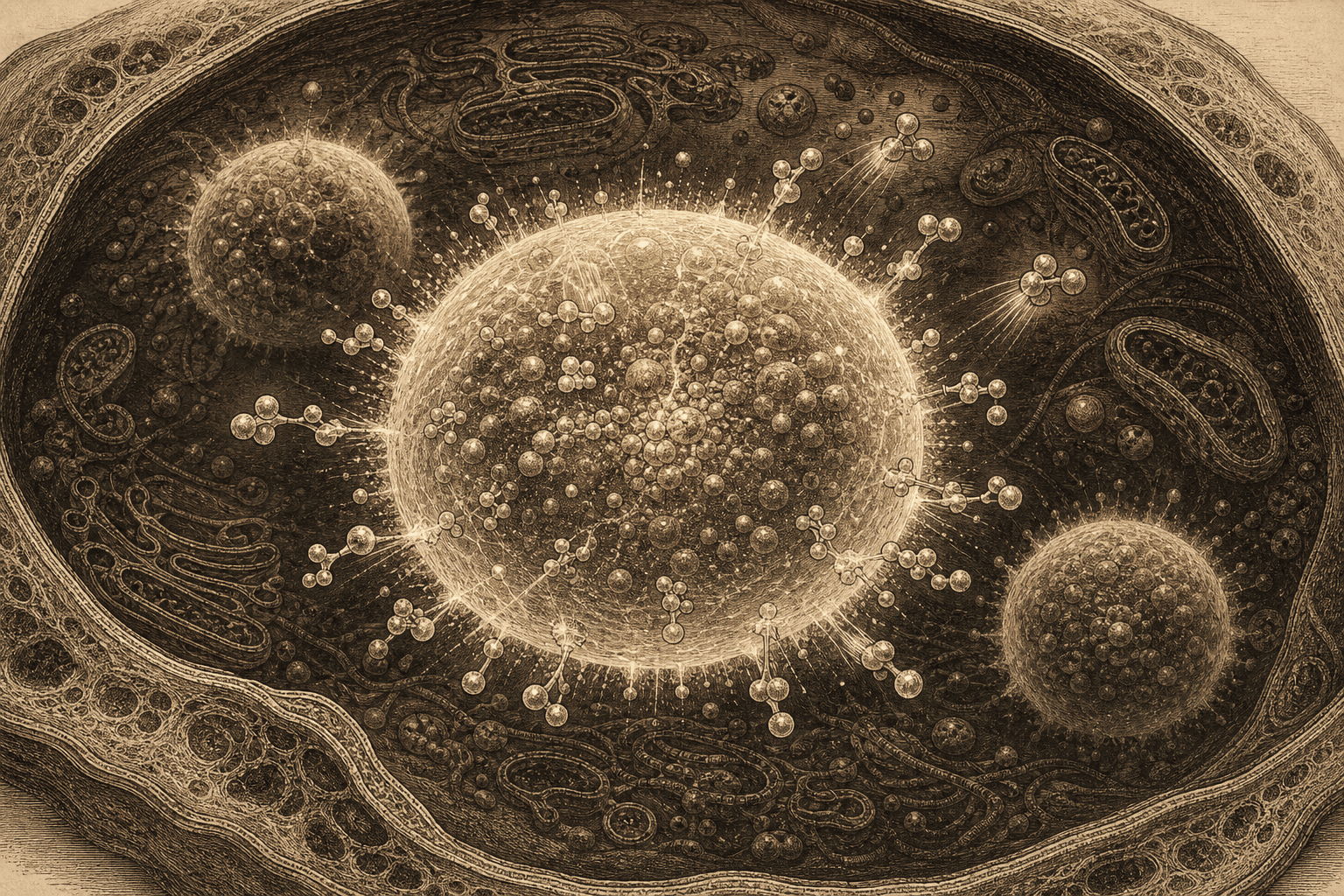
Washington University researchers report that biomolecular condensates formed from disordered proteins create interfacial electric fields and alter nearby water in ways that accelerate several hydrolysis reactions. The effect appeared with laboratory condensates and in bacterial cells, including reactions involving nucleic acids and ATP. The team calls the emergent catalysts "condenzymes," but the finding does not make every cellular droplet an enzyme or establish a disease treatment.
Why it matters
Experiments suggest biomolecular condensates can accelerate reactions at their surfaces without behaving like conventional enzymes.
Limits and context
- The effect appeared with laboratory condensates and in bacterial cells, including reactions involving nucleic acids and ATP.
- The team calls the emergent catalysts "condenzymes," but the finding does not make every cellular droplet an enzyme or establish a disease treatment.
Key claims
Experiments suggest biomolecular condensates can accelerate reactions at their surfaces without behaving like conventional enzymes.
Qualification: The effect appeared with laboratory condensates and in bacterial cells, including reactions involving nucleic acids and ATP.
Evidence: source-2026-07-25-001
Sources
- Washington University in St. Louis via EurekAlert: CondenzymesWashington University in St. Louis via EurekAlert · official announcement
Corrections
No corrections have been recorded for this story.