research
A Classical Client Holds the Quantum Reins
A theoretical protocol lets a client with no quantum hardware privately control one malicious server, retain hidden remote quantum memory and verify sampling under a post-quantum assumption.
Summary
A theoretical protocol lets a client with no quantum hardware privately control one malicious server, retain hidden remote quantum memory and verify sampling under a post-quantum assumption.
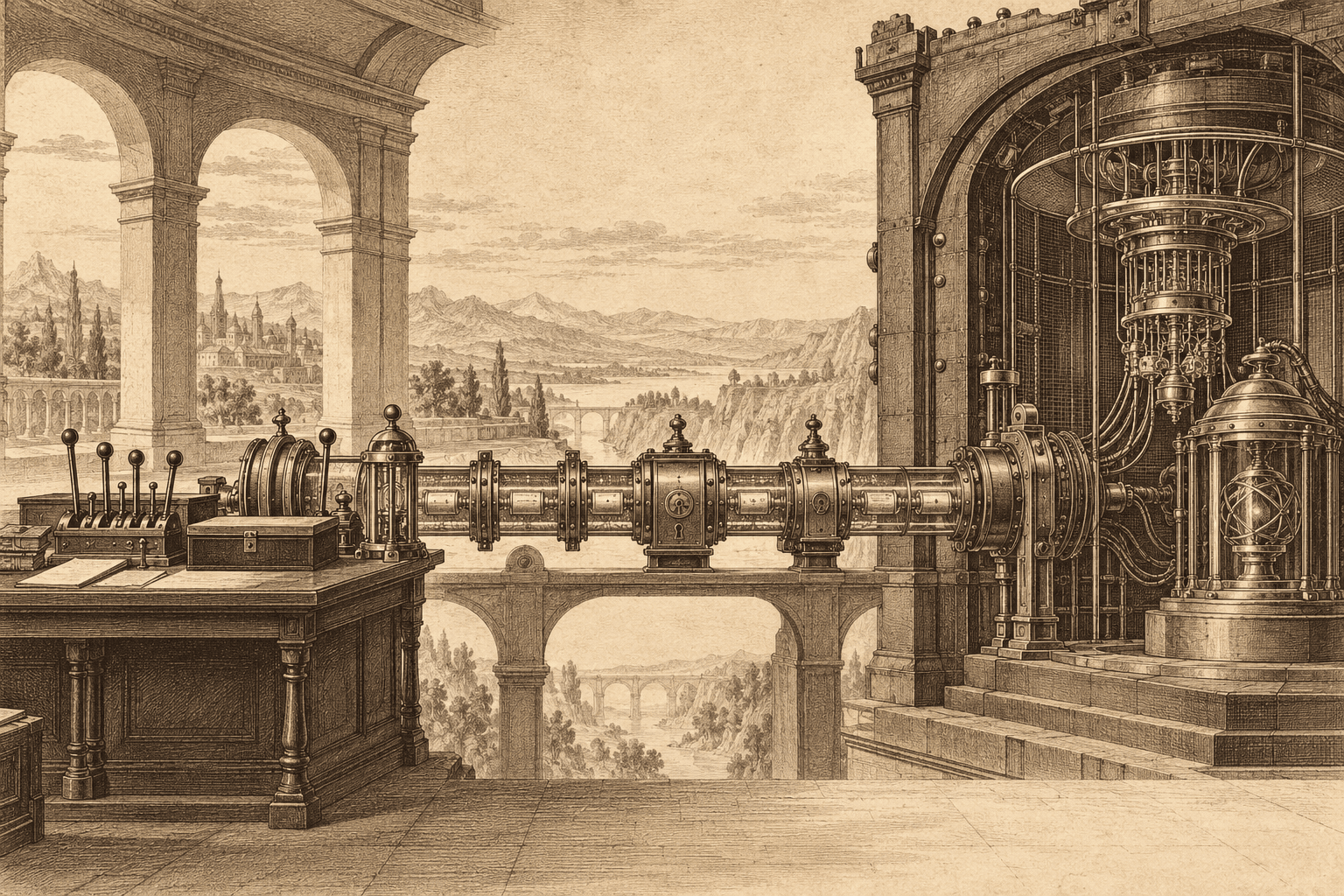
A classical computer cannot normally prepare, store or process quantum states. This work constructs a cryptographic route around that hardware boundary: a purely classical client delegates to one untrusted quantum server while keeping the chosen computation and persistent quantum memory hidden from that server. The authors use the construction to resolve two stated open problems—classical verification of quantum sampling with negligible computational soundness error and remote preparation of arbitrary efficiently preparable quantum states. The foundation is a maliciously secure two-party protocol assuming the post-quantum hardness of learning with errors. This is a theoretical result, not a deployed service or a claim that classical hardware simulates quantum computation locally; its guarantees depend on the protocol model and cryptographic assumption.
Why it matters
A theoretical protocol lets a client with no quantum hardware privately control one malicious server, retain hidden remote quantum memory and verify sampling under a post-quantum assumption.
Limits and context
- A classical computer cannot normally prepare, store or process quantum states.
- This is a theoretical result, not a deployed service or a claim that classical hardware simulates quantum computation locally; its guarantees depend on the protocol model and cryptographic assumption.
Key claims
A theoretical protocol lets a client with no quantum hardware privately control one malicious server, retain hidden remote quantum memory and verify sampling under a post-quantum assumption.
Qualification: A classical computer cannot normally prepare, store or process quantum states.
Evidence: source-2026-10-26-002
Sources
- arXiv preprint 2610.31775, original v1arXiv · primary research
Corrections
No corrections have been recorded for this story.