A heavier small-vessel disease burden on preoperative MRI was associated with nearly doubled odds of delirium after noncardiac surgery.
Editorial illustration
Original conceptual illustration of preexisting cerebral small-vessel disease and postoperative delirium risk; it is not an MRI, patient image, prediction output or figure from the study. Original editorial illustration generated with built-in Codex Image Gen for The Machine Press, 2026-08-04.
A prospective study followed 804 adults ages 65 to 85 undergoing elective noncardiac surgery at five academic centers in China. Sixty-nine patients, or 9 percent, developed delirium during the first three postoperative days. The rate rose to 28 percent among those with the highest MRI-measured small-vessel disease burden, and high burden was associated with an adjusted odds ratio of 1.95; lacunes had the strongest individual association. The result identifies a preexisting risk marker, not a causal mechanism, a validated individual prediction rule or a recommendation for routine MRI screening.
Original conceptual illustration of luminous fast blue optical transients and dense circumstellar shocks; it is not telescope imagery, a literal count diagram or a published figure. Original editorial illustration generated with built-in Codex Image Gen for The Machine Press, 2026-08-04.
Radio observations point to shocks moving at up to three-tenths light speed through dense material shed shortly before each terminal event.
Researchers assembled early optical, radio and X-ray observations of six luminous fast blue optical transients found in Zwicky Transient Facility data. Radio modeling at roughly 50 to 100 rest-frame days favored shocks moving at 0.1 to 0.3 times light speed through electron densities near 1,000 to 10,000 particles per cubic centimeter, while X-ray luminosity varied by about two orders of magnitude near day 20. The events were generally offset from the centers of star-forming host galaxies; one, AT2024aehp, also showed an unusual late optical plateau. Similar radio behavior supports a scenario in which progenitors lost mass shortly before their terminal events, but it does not identify a confirmed progenitor or universal mechanism.
A paleo-model recovered warning signals before an abrupt Baffin Bay ice-shelf collapse under non-ideal conditions.
Researchers examined a Parallel Ice Sheet Model run containing an abrupt Baffin Bay ice-shelf collapse and tested whether critical-slowing indicators appeared in nearby basins. Variance and autocorrelation rose significantly in the adjacent northwest basin beginning around 9,000 years before present, ahead of the modeled loss; the signal persisted across detrending and window choices and was unlikely to be inherited forcing variability. The study shows how early warnings can survive messy model output when assumptions are tested carefully. It is not a forecast that present-day Greenland has crossed a tipping point.
Illustrative fiber-optic macro file image; it does not depict interstellar dust, starlight polarization, the modeled sightlines or any reported spectrum. Atlantic Ambience / Pexels; cropped, resized, metadata stripped, and converted to WebP by The Machine Press.
Radiative torque plus paramagnetic relaxation reproduced the ultraviolet excess seen toward two stars.
Models constrained with four stellar sightlines tested how dust-grain alignment shapes interstellar polarization from infrared through far ultraviolet. For HD 30614 and HD 204827, radiation from a B-type star below the Lyman limit strengthened radiative-torque alignment, while adding Davis-Greenstein paramagnetic relaxation improved the shortest-wavelength fit. Two ordinary Serkowski spectra were explained mostly by radiative torque under a typical interstellar field. The work is a model interpretation of existing observations, not a new direct image of dust grains.
Electrical-field measurements flagged extra-cochlear electrodes while immediate correction was still possible.
In a prospective single-institution surgical study, researchers recorded stimulation-current-induced voltages while one to six cochlear-implant electrodes were deliberately held outside the cochlea before full insertion. Three reviewers blinded to the surgeon's count used the electrical-field patterns to rank misplaced contacts, with agreement that tracked the number left out and was not materially changed by revision status or whether blood or fascia surrounded the contacts. The method showed high sensitivity and moderate specificity, making it a promising intraoperative check, but clinical adoption would require training and outcome validation.
A biochemical construction encoded graph-isomorphism proofs while keeping the hidden node mapping secret.
The proposed scheme assigns deliberately orthogonal DNA strands to graph nodes and uses complementary half-linkers to confirm edges through duplex formation. A verifier observes which bindings occur without learning how the two graphs align. Seeded Monte Carlo analysis estimated off-target binding noise small enough to remain an additive correction to the protocol's existing one-half per-round cheating probability. This is a molecular cryptography construction supported by sequence simulation, not evidence of a deployed biochemical security system.
A low-cost facial depth sensor ranked people consistently but missed the precision needed for reconstruction.
Two observers measured 12 adults at 16 facial distances using a low-cost depth sensor, a structured-light scanner and direct calipers. Device-versus-caliper agreement looked high by intraclass correlation, at 0.88 and 0.93, yet mean absolute error was 2.75 millimeters versus 1.64 millimeters for the comparator and 14 of 16 depth-sensor distances exceeded a two-millimeter tolerance. The authors conclude that the inexpensive device suits surveys, ranking and within-person monitoring, not high-fidelity reconstruction; high correlation alone did not establish clinical usability.
Researchers coated ZSM-5 zeolite with an inert silica shell and then added 2 percent nickel, preserving the pore framework while moderating external acidity. Under optimized laboratory conditions, the core-shell catalyst converted 91.1 percent of n-heptane with 56.7 percent selectivity for isomers. The authors attribute the result to a balance among acidity, mass transport and metal-acid cooperation. It is a controlled catalyst study, not evidence of refinery-scale durability or economics.
Generic processor-pin macro file image used for its repeated metallic geometry; it does not depict titanium powder, either printing process, a tested specimen or the reported microstructure. Pixabay / Pexels; cropped, resized, metadata stripped, and converted to WebP by The Machine Press.
Electron-beam printing produced a titanium structure that combined 1,120-megapascal yield strength with 11.1 percent elongation.
A comparison of Ti-6Al-4V made by laser and electron-beam powder-bed fusion found acicular martensite and high residual stress in the laser-built specimens. Electron-beam preheating at 740 degrees Celsius slowed cooling and produced a coarser alpha-plus-beta lamellar structure; together with 0.24 percent oxygen, it reached 1,120 plus or minus 12 megapascals in yield strength and 11.1 plus or minus 1.3 percent elongation. A deformation-induced phase change also helped accommodate strain. The finding concerns tested specimens, not every machine or production geometry.
Wearable electromyography reproduced activation onset and overall stroke-waveform shape one week later.
Fifteen competitive rowers completed two all-out 2,000-meter trials seven days apart while a wireless system recorded seven muscles. Activation onset was highly repeatable across every muscle, and each athlete's ensemble stroke waveform remained strongly similar between sessions. Offset, peak position and active duration were less uniformly reliable, while amplitude and active duration showed a reproducible U-shaped pattern through the trial. The small cohort supports personalized monitoring feasibility, not population-wide training prescriptions.
Three compounds attracted a pest-eating stink bug in laboratory assays and field trials.
Researchers traced aggregation in fifth-instar Eocanthecona furcellata, a predatory stink bug that attacks several pest groups, to antennal sensing and volatile compounds from nymph extracts. Chemical and electrophysiological screening identified three active molecules: (E)-4-oxo-2-hexenal, tetradecanal and tridecane. Laboratory tests and field trials confirmed attraction and helped define useful range, placement height and duration. The compounds could support monitoring or recruitment of this natural enemy, but operational pest-control gains still need field-program evaluation.
Piglet stromal cells shifted the shape, growth and signaling of intestinal organoids across early development.
Researchers isolated jejunal mesenchymal stromal cells from newborn, seven-day and 21-day piglets and paired them with intestinal enteroids. Newborn cells supported larger, mostly cystic enteroids; seven-day cells favored more multi-budded structures and showed a transitional gene-expression profile; 21-day cells increased WNT and BMP antagonists. Brief calcium-channel inhibition in seven-day cells rapidly changed niche-factor expression. The work maps age-linked associations in piglet cells and co-cultures rather than proving a human developmental mechanism.
Community visits plus messaging improved household prevention practices and reduced mosquito-vector measures more than visits alone.
A three-group implementation study in two Colombian municipalities compared usual control, community visits, and visits plus WhatsApp support. Among 874 households, the combined group improved management of small breeding sites by 15.9 percentage points and showed broader gains in preventive practice and entomological indices than visits alone; participants also rated the messaging acceptable. The quasi-experimental design supports WhatsApp as a practical engagement layer in this setting, but it does not establish universal effectiveness and the trial was registered retrospectively.
Conceptual Visualising AI file image; it does not depict renal tissue, a whole-slide image, the Prov-GigaPath model, validation data or a clinical output. Novoto Studio / Google DeepMind / Pexels; cropped, resized, metadata stripped, and converted to WebP by The Machine Press.
A multicenter renal-tumor system combined tissue detection, subtype classification, nuclear grading and survival stratification.
The retrospective study used 11,135 whole-slide images from 7,033 patients across four medical centers and two public cohorts. A framework built on Prov-GigaPath representations reported area-under-the-curve values of 0.956 to 0.998 for nine major renal-tumor subtypes across validation cohorts, 0.867 for nuclear-grade prediction, and a slide-derived risk score that independently stratified overall survival. The breadth and external validation are notable, but prospective workflow studies are still needed to measure clinical utility and effects on pathologist performance.
CT-derived fat and liver markers explained a modest extra share of MRI brain-age variation in women.
A retrospective screening cohort included 1,280 women who had both abdominal CT and brain MRI. After adjustment for age, body-mass index, blood markers and health behaviors, a higher abdominal fat ratio was associated with an older MRI-derived brain-age gap, while a higher liver-to-spleen attenuation ratio was associated with a younger gap. Both measures retained independent associations and added modest explanatory value beyond clinical covariates. The study is cross-sectional and associative; it does not show that changing either CT marker will alter brain aging.
An open ROS 2 prototype combined hand tracking, fatigue logic and predictive positioning on a standard collaborative robot.
A feasibility system on a Universal Robots UR3 combined hand-landmark recognition, a finite-state controller, gaze and fatigue logic, analytical motion control and half-second hand-position extrapolation. Its gesture classifier reached 99.62 percent on a held-out sample set, and the authors estimate a conservative worst-case gesture-to-motion latency near 830 milliseconds. Crucially, this was a single-operator demonstration, and a glasses hardware failure meant fatigue, gaze and stress pathways were checked with simulated triggers rather than organic pupil data. Multi-person physiological validation remains future work.
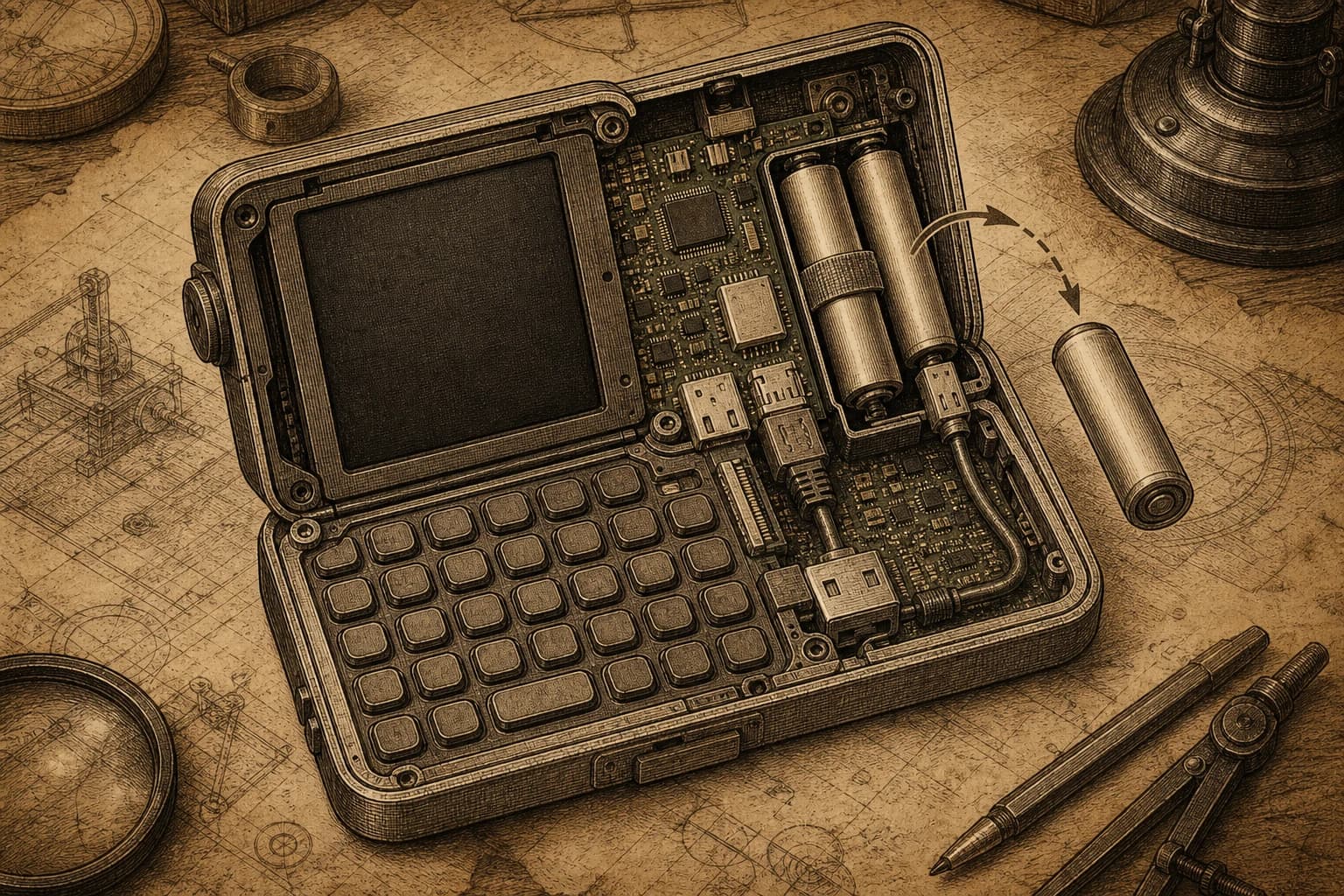
Packs a Raspberry Pi Zero 2W, square display, thumb keyboard, three USB ports, swappable batteries, and accessible storage into a palm-size Linux terminal.
Visit Hackberry Pi ZeroOriginal editorial concept art generated with built-in Codex Image Gen for The Machine Press, 2026-08-02; carried into the 2026-08-04 edition.
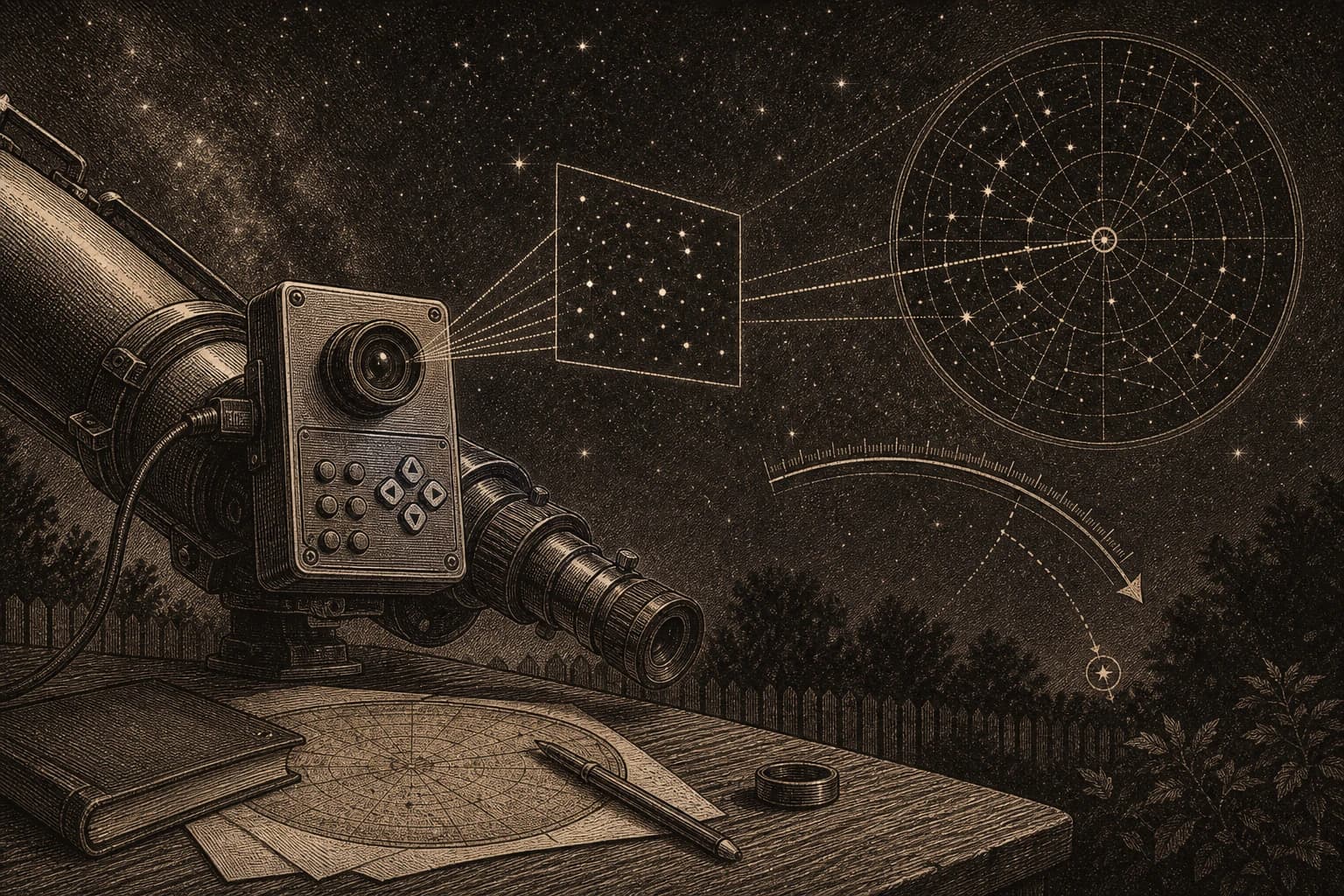
Mounts a Raspberry Pi camera beside a telescope, plate-solves the star field, and combines GPS and inertial sensing to guide push-to observing without a separate alignment routine.
Visit PiFinderOriginal editorial concept art generated with built-in Codex Image Gen for The Machine Press, 2026-08-02; carried into the 2026-08-04 edition.
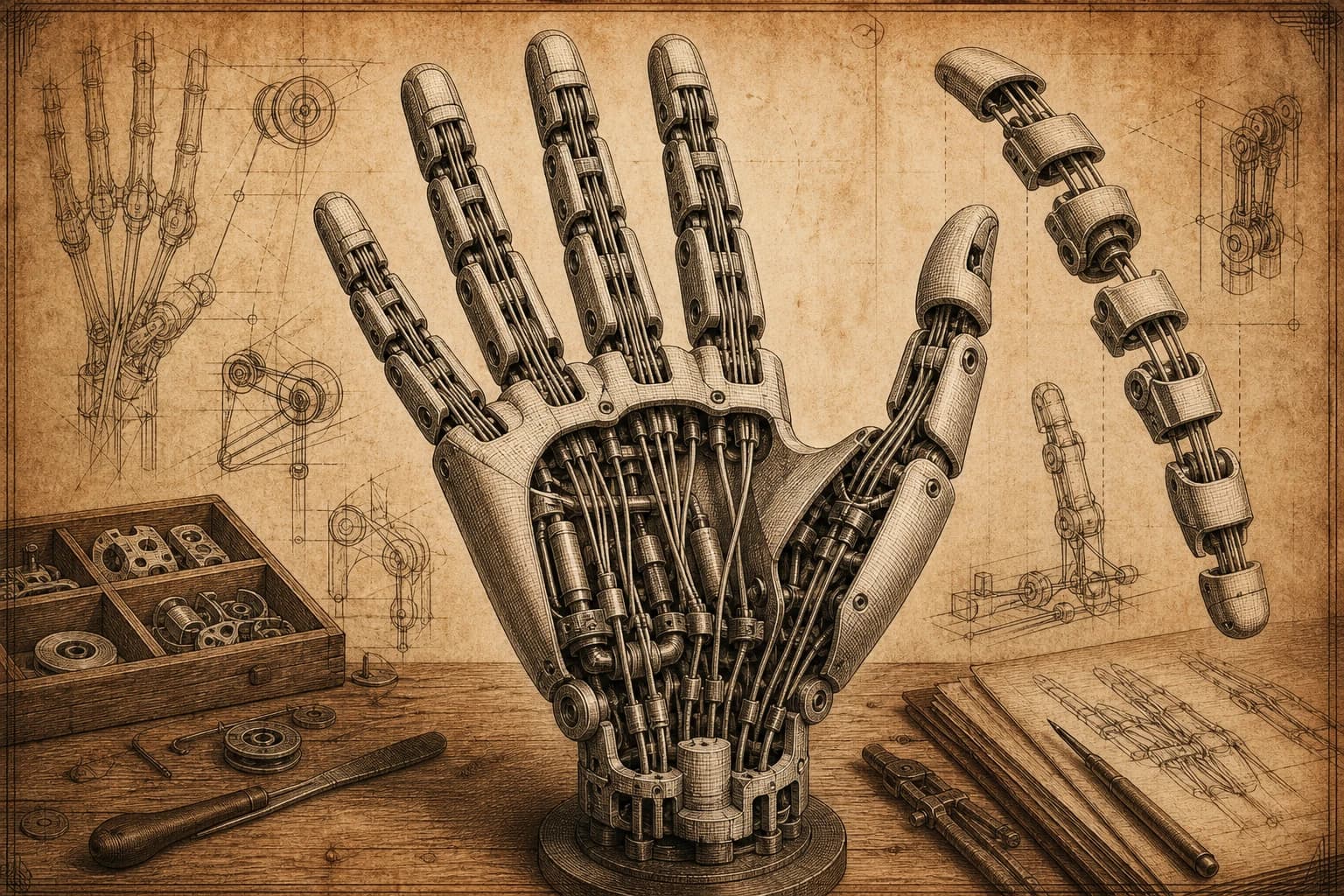
Routes tendons through a modular five-finger, 16-joint hand with seven controlled degrees of freedom, printable parts, firmware, an SDK, ROS 2 tools, and simulation assets.
Visit Aero Hand OpenOriginal editorial concept art generated with built-in Codex Image Gen for The Machine Press, 2026-08-02; carried into the 2026-08-04 edition.
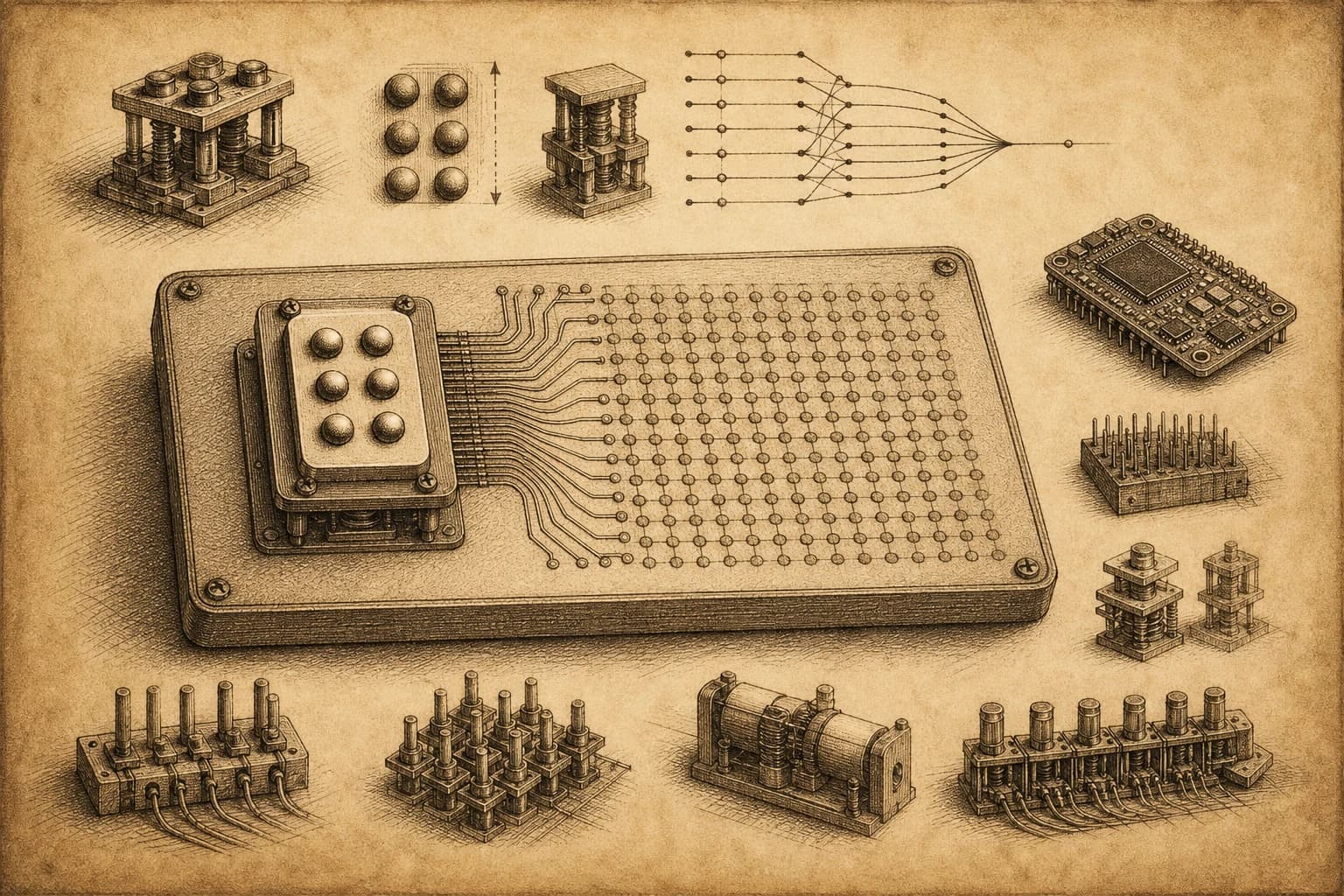
Explores pairing one physical refreshable Braille cell with a tactile sensor matrix representing virtual character positions, reducing the amount of moving hardware under study.
Visit BrailleTouchOriginal Codex Image Gen concept art from 2026-07-10; carried forward from the validated 2026-08-01 edition.
Desk Picks are selected by the newsroom. Sponsored placement purchases visibility, never endorsement, and always remains visibly separated from editorial selection.
 Editorial illustration