research
The Dinosaur Killer Was an Oddball
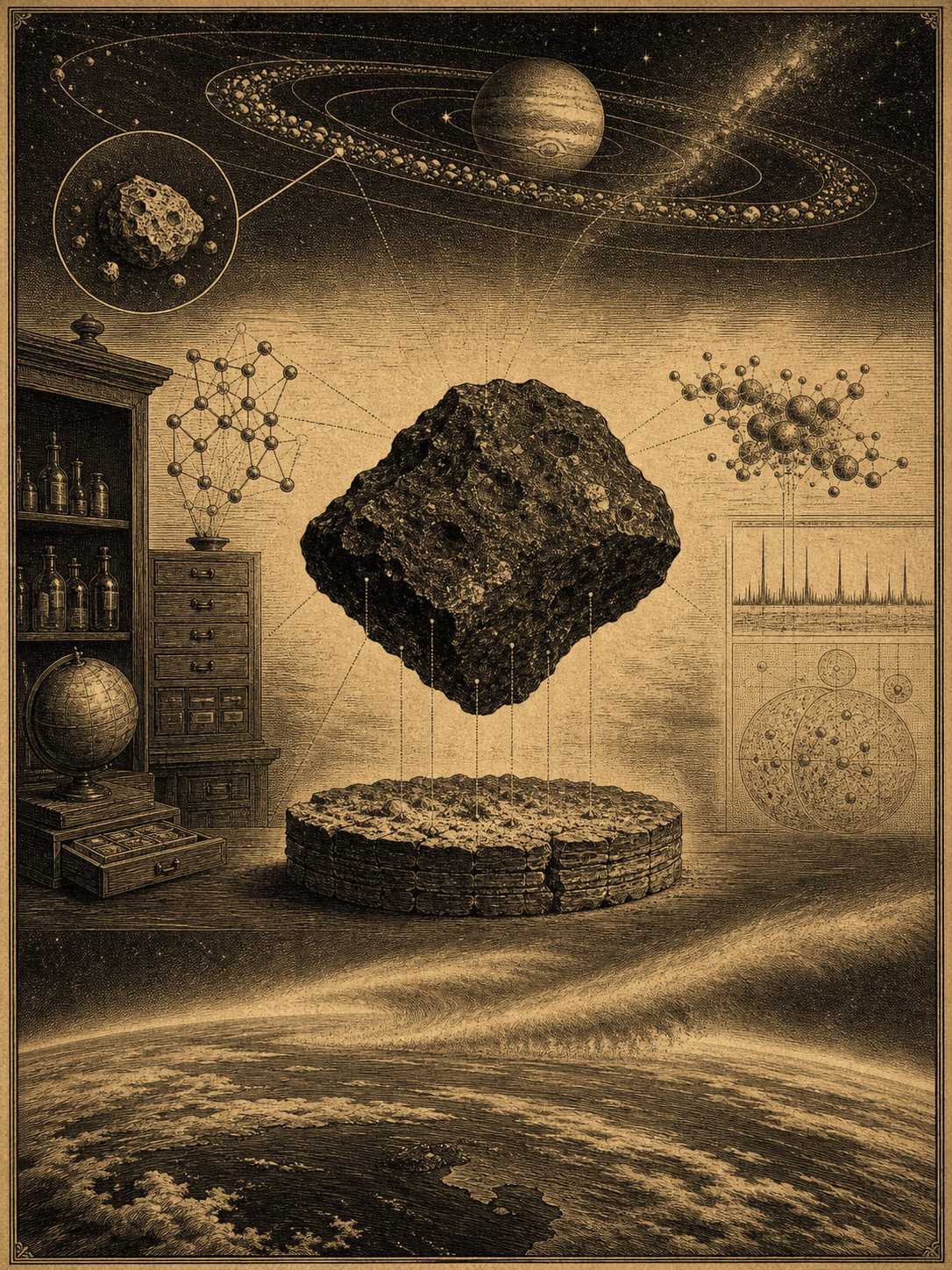
Nickel isotopes in the global impact layer point to an exceptionally rare CO carbonaceous chondrite, not a typical meteorite.
Summary
Nickel isotopes in the global impact layer point to an exceptionally rare CO carbonaceous chondrite, not a typical meteorite.
Researchers from British Columbia, Paris, Brussels, and Vienna analyzed nickel isotope traces preserved in the thin clay layer left by the Chicxulub impact. The signature points to a carbonaceous chondrite of the Ornans class, a very small subset of the roughly five percent of sampled meteorites classed as carbonaceous. Because CO chondrites contain relatively little sulfur, the team argues that fine debris lofted by the impact was probably more important to the extinction aftermath than sulfur carried inside the projectile. The isotope result narrows the impactor class; it does not identify its exact original orbit.
Why it matters
Nickel isotopes in the global impact layer point to an exceptionally rare CO carbonaceous chondrite, not a typical meteorite.
Limits and context
- The isotope result narrows the impactor class; it does not identify its exact original orbit.
Key claims
Nickel isotopes in the global impact layer point to an exceptionally rare CO carbonaceous chondrite, not a typical meteorite.
Qualification: The isotope result narrows the impactor class; it does not identify its exact original orbit.
Evidence: source-2026-07-19-002
Sources
- University of British Columbia via ScienceDaily: Chicxulub impactor classUniversity of British Columbia via ScienceDaily · secondary reporting
Corrections
No corrections have been recorded for this story.