research
Grass Crystals Keep Twenty-Five Thousand Years of Fire
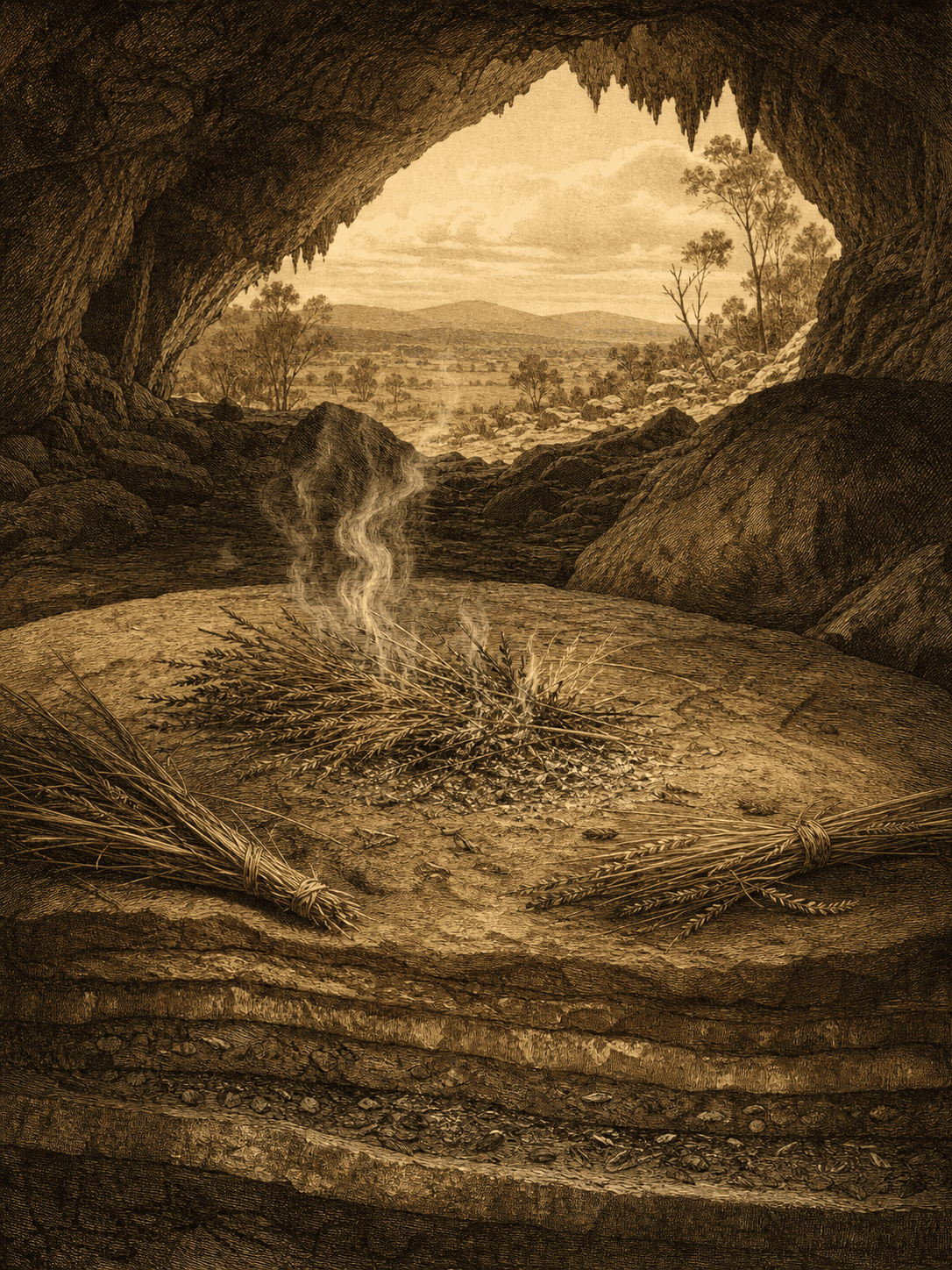
Phytoliths at Cloggs Cave indicate that GunaiKurnai people repeatedly carried selected grasses underground for ritual burning since the last Ice Age.
Summary
Phytoliths at Cloggs Cave indicate that GunaiKurnai people repeatedly carried selected grasses underground for ritual burning since the last Ice Age.
Researchers working with the GunaiKurnai Land and Waters Aboriginal Corporation analyzed microscopic silica bodies preserved in sediments at Cloggs Cave in southeastern Australia. The phytolith record indicates that people brought grasses into the cave and burned them there across roughly 25,000 years, supporting oral and ethnographic accounts of the cave as a place for ritual practice rather than ordinary habitation. The finding tracks continuity through plant remains; it does not reconstruct any specific ceremony or erase the authority of GunaiKurnai knowledge about the site.
Why it matters
Phytoliths at Cloggs Cave indicate that GunaiKurnai people repeatedly carried selected grasses underground for ritual burning since the last Ice Age.
Limits and context
- The finding tracks continuity through plant remains; it does not reconstruct any specific ceremony or erase the authority of GunaiKurnai knowledge about the site.
Key claims
Phytoliths at Cloggs Cave indicate that GunaiKurnai people repeatedly carried selected grasses underground for ritual burning since the last Ice Age.
Qualification: The finding tracks continuity through plant remains; it does not reconstruct any specific ceremony or erase the authority of GunaiKurnai knowledge about the site.
Evidence: source-2026-07-22-002
Sources
- Frontiers via EurekAlert: Cloggs Cave ritual grass burningFrontiers via EurekAlert · secondary reporting
Corrections
No corrections have been recorded for this story.