research
The Fire Was Burning Below the Forest
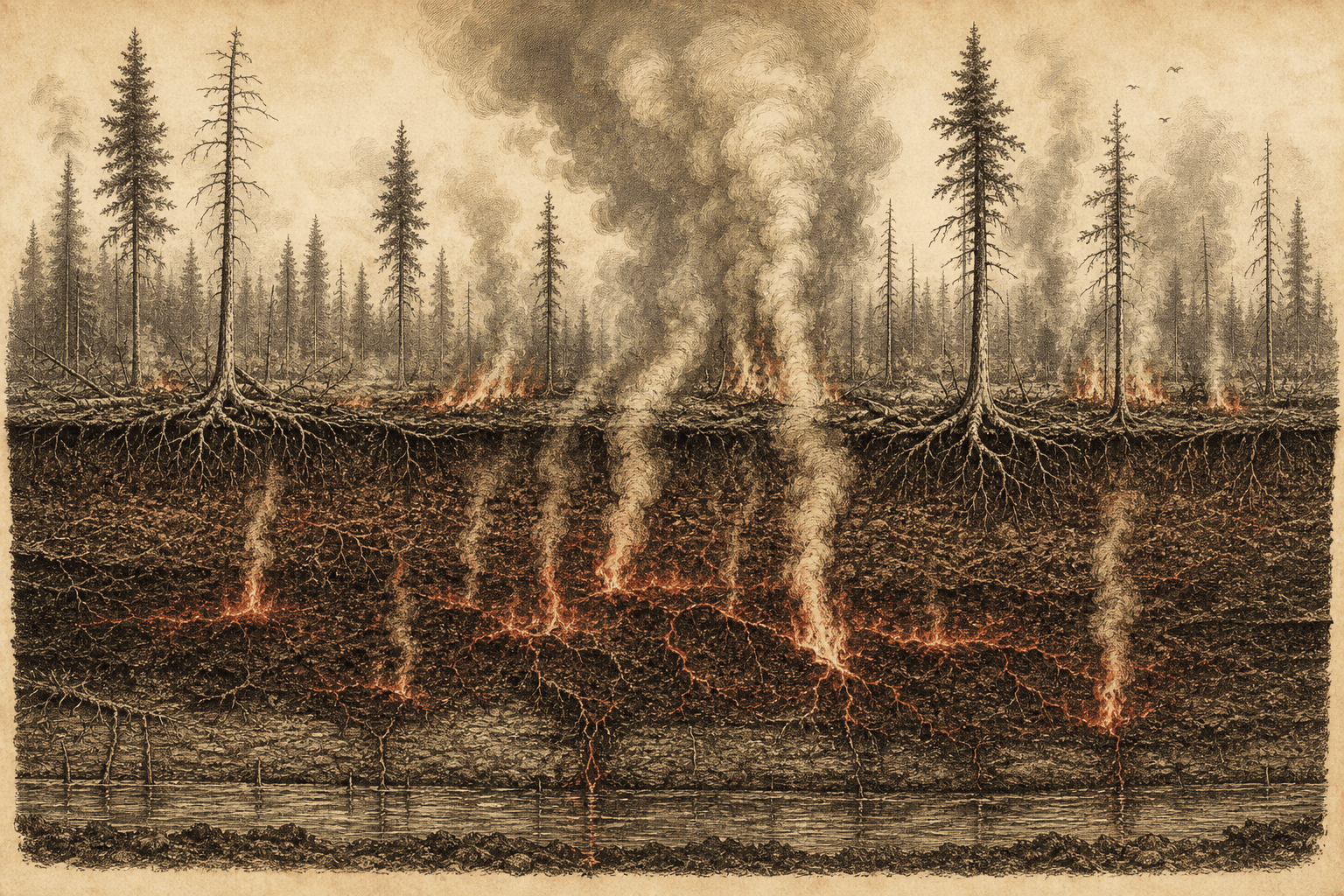
Soil and peat combustion produced an estimated 76 percent of the carbon released in Canada's record 2023 wildfire season.
Summary
Soil and peat combustion produced an estimated 76 percent of the carbon released in Canada's record 2023 wildfire season.
McMaster University researchers estimated that Canada's 2023 wildfires burned 15.1 million hectares and released 554 million tonnes of carbon. Their July 27 Geophysical Research Letters study attributes about 423 million tonnes, or 76 percent, to soil and peat rather than living biomass; peatlands alone supplied roughly one-third of total emissions. The analysis shows why hotter, drier conditions can turn long-lived underground carbon stores into fuel, while its modeled totals carry uncertainty and do not make every Canadian fire a peat fire.
Why it matters
Soil and peat combustion produced an estimated 76 percent of the carbon released in Canada's record 2023 wildfire season.
Limits and context
- The analysis shows why hotter, drier conditions can turn long-lived underground carbon stores into fuel, while its modeled totals carry uncertainty and do not make every Canadian fire a peat fire.
Key claims
Soil and peat combustion produced an estimated 76 percent of the carbon released in Canada's record 2023 wildfire season.
Qualification: The analysis shows why hotter, drier conditions can turn long-lived underground carbon stores into fuel, while its modeled totals carry uncertainty and do not make every Canadian fire a peat fire.
Evidence: source-2026-07-28-002
Sources
- McMaster University via EurekAlert: Soil and peat in Canada 2023 wildfire emissionsMcMaster University via EurekAlert · official announcement
Corrections
No corrections have been recorded for this story.