research
The Droplet Learned the Shape of a Mouth
Oil, water and a block copolymer produced reversible flowers, branches, cups and a nonliving version of cellular engulfment.
Summary
Oil, water and a block copolymer produced reversible flowers, branches, cups and a nonliving version of cellular engulfment.
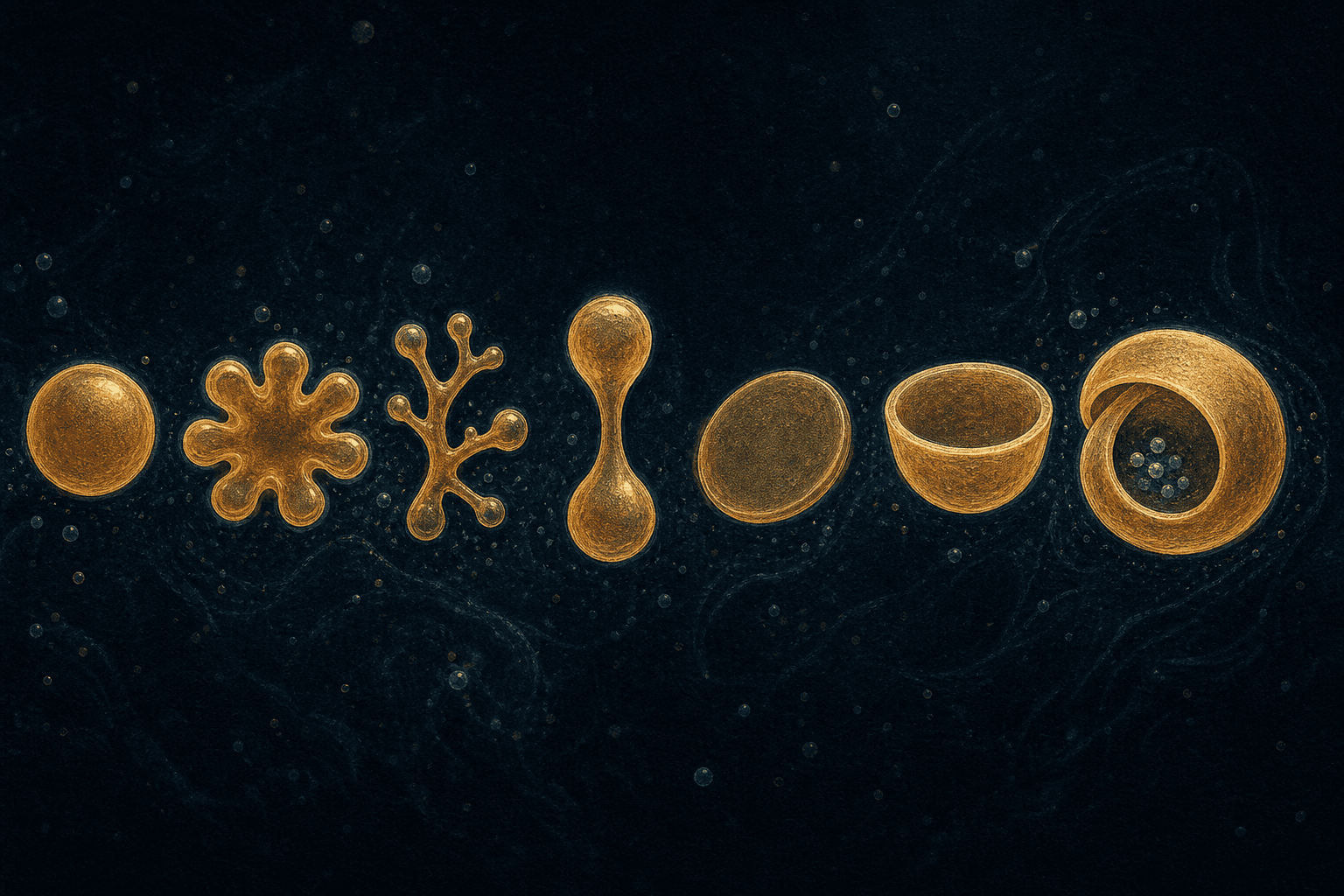
New York University researchers added the P123 block copolymer to microscopic oil droplets suspended in water and watched the spheres transform into flower-like forms, branches, dumbbells, disks and cups. Changing polymer concentration or temperature could reverse the sequence. Under selected conditions, a cup folded closed around surrounding liquid and suspended particles, resembling macropinocytosis without genes, proteins or cellular machinery. The work offers a controllable model for studying shape change and possible adaptive materials, but the droplets are not artificial life and no application was demonstrated.
Why it matters
Oil, water and a block copolymer produced reversible flowers, branches, cups and a nonliving version of cellular engulfment.
Limits and context
- The work offers a controllable model for studying shape change and possible adaptive materials, but the droplets are not artificial life and no application was demonstrated.
Key claims
Oil, water and a block copolymer produced reversible flowers, branches, cups and a nonliving version of cellular engulfment.
Qualification: The work offers a controllable model for studying shape change and possible adaptive materials, but the droplets are not artificial life and no application was demonstrated.
Evidence: source-2026-08-02-002
Sources
- Nature Communications: Morphogenic colloidsNature Communications · secondary reporting
Corrections
No corrections have been recorded for this story.