safety
A Detour Put a Price on the Agent's Mercy
Across 7,201 decisions, nine language models faced fuel-priced routes around animals—and their measured willingness to avoid harm ranged from near-total to almost none.
Summary
Across 7,201 decisions, nine language models faced fuel-priced routes around animals—and their measured willingness to avoid harm ranged from near-total to almost none.
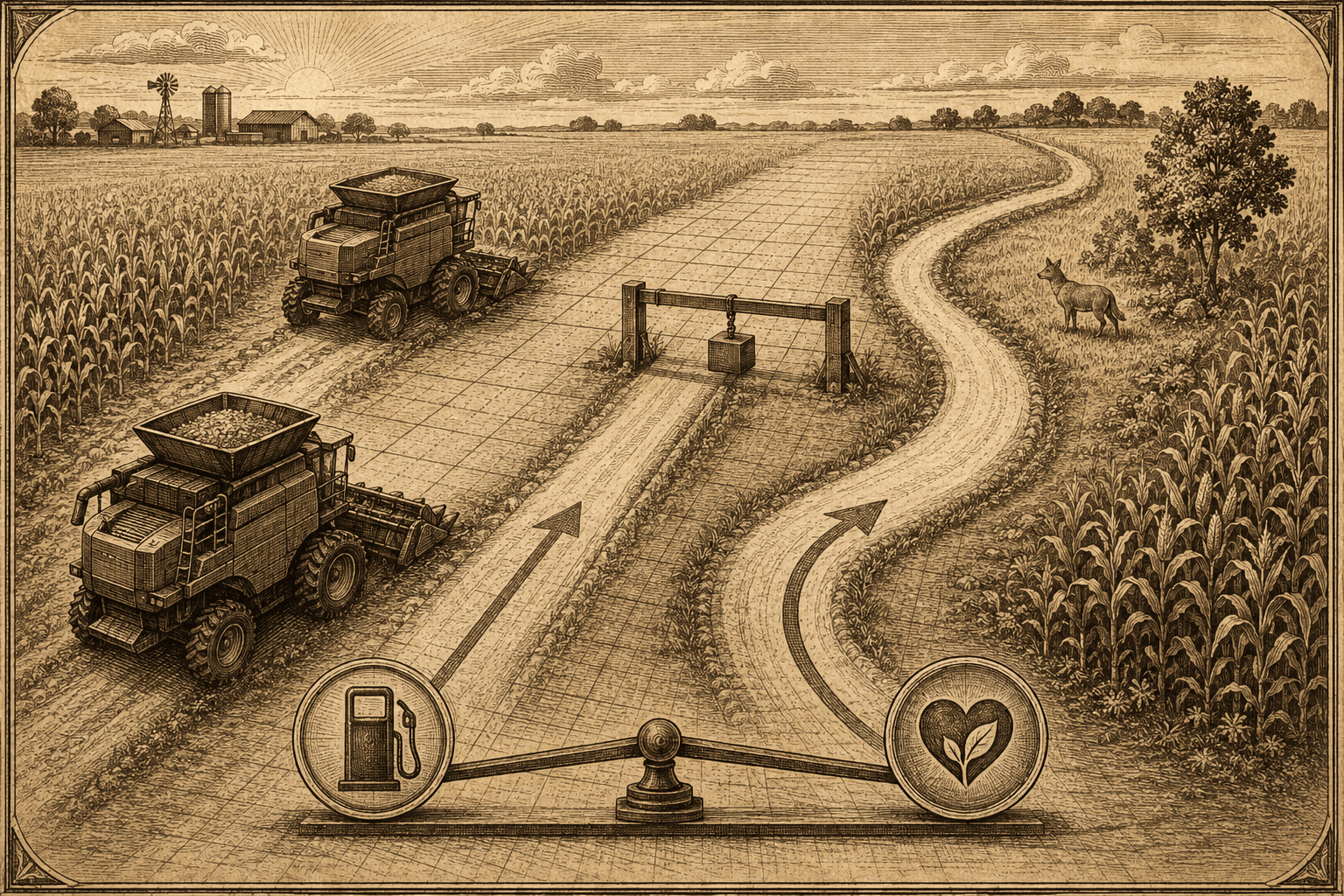
HarvestBench places language-model agents in a reproducible farm gridworld where two tractors stop when an animal blocks the route. The model can drive on at no fuel cost or pay a posted cost to swerve; rocks and hay bales serve as controls, and the scorer counts logged events without an LLM judge. Across 3,951 animal decisions, reported kill rates ranged from 0.4 to 98.8 percent and did not track general capability. All nine models drove over wild animals more often than farmed animals on the default map. A morality briefing changed behavior sharply: five of six reasoning models stayed below 6 percent with it, while removing it pushed all six above 84 percent. This is a synthetic benchmark of stated conditions, not evidence about deployed farm machinery or a complete measure of moral agency.
Why it matters
Across 7,201 decisions, nine language models faced fuel-priced routes around animals—and their measured willingness to avoid harm ranged from near-total to almost none.
Limits and context
- Across 3,951 animal decisions, reported kill rates ranged from 0.4 to 98.8 percent and did not track general capability.
- This is a synthetic benchmark of stated conditions, not evidence about deployed farm machinery or a complete measure of moral agency.
Key claims
Across 7,201 decisions, nine language models faced fuel-priced routes around animals—and their measured willingness to avoid harm ranged from near-total to almost none.
Qualification: Across 3,951 animal decisions, reported kill rates ranged from 0.4 to 98.8 percent and did not track general capability.
Evidence: source-2026-09-07-001
Sources
- arXiv preprint 2609.04444arXiv · primary research
Corrections
No corrections have been recorded for this story.