research
Two Million Hours of Sleep Became One Health Model
SleepFM-2 learned from 282,511 overnight recordings and transferred across diseases, sleep events, wearable sensors and subjective reports.
Summary
SleepFM-2 learned from 282,511 overnight recordings and transferred across diseases, sleep events, wearable sensors and subjective reports.
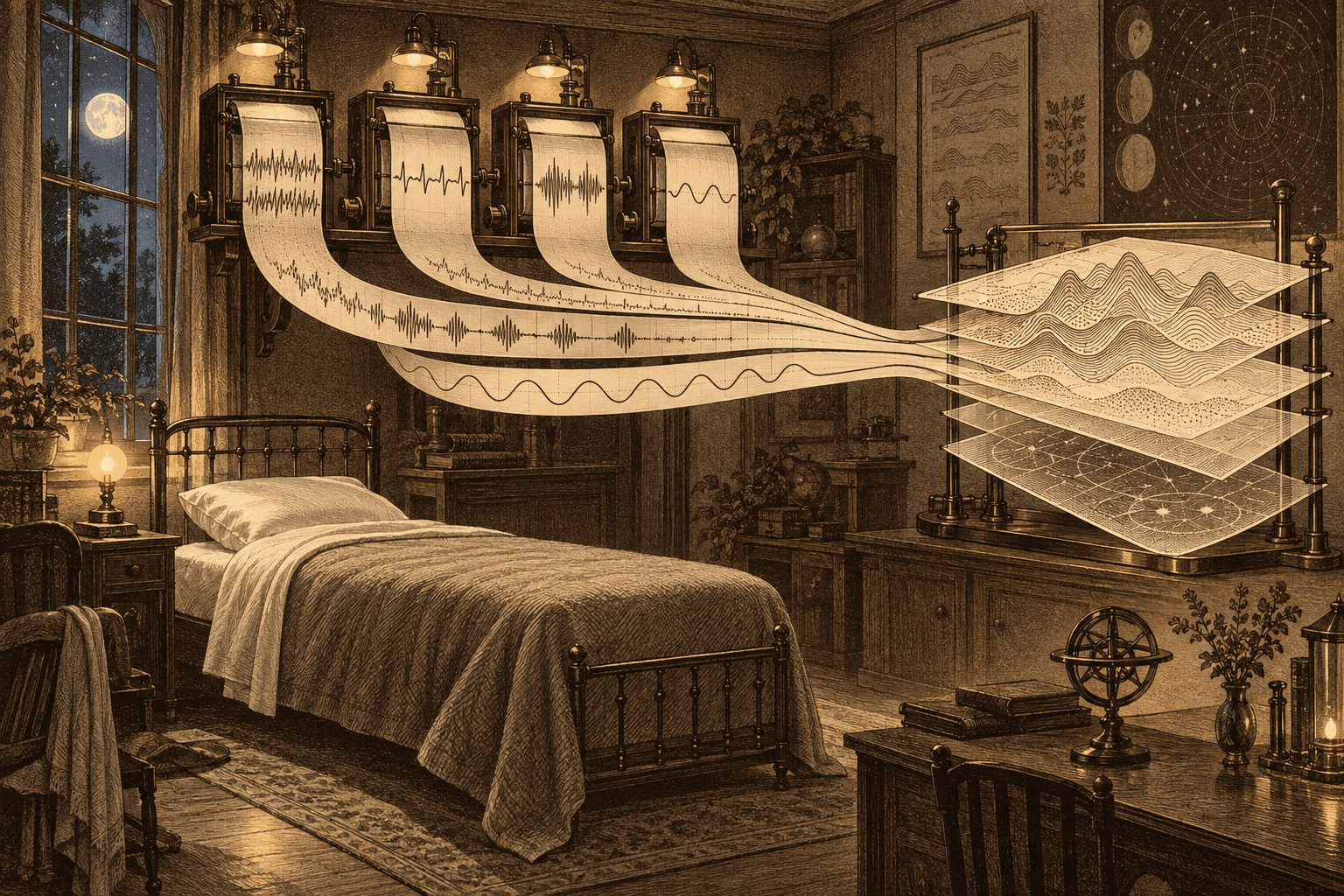
SleepFM-2 was developed and evaluated on 282,511 polysomnography recordings from 26 cohorts, with 235,865 recordings used for pretraining and more than two million hours of physiology in total. The model combines signals from the brain, heart, muscles and respiratory system. With age, sex and BMI, its representation met a prespecified criterion for 215 later-recorded EHR phenotypes in two held-out cohorts; for 155, the sleep representation added reproducible information beyond demographics. The frozen encoder also transferred to expert-scored sleep events, wakeful EEG, headband and in-ear EEG, wrist photoplethysmography and accelerometry. These are retrospective model results across the reported cohorts, not a clinical diagnosis or proof of benefit for an individual.
Why it matters
SleepFM-2 learned from 282,511 overnight recordings and transferred across diseases, sleep events, wearable sensors and subjective reports.
Limits and context
- These are retrospective model results across the reported cohorts, not a clinical diagnosis or proof of benefit for an individual.
Key claims
SleepFM-2 learned from 282,511 overnight recordings and transferred across diseases, sleep events, wearable sensors and subjective reports.
Qualification: These are retrospective model results across the reported cohorts, not a clinical diagnosis or proof of benefit for an individual.
Evidence: source-2026-09-09-002
Sources
- arXiv preprint 2609.06849arXiv · primary research
Corrections
No corrections have been recorded for this story.