media creative tools
Three-Dimensional Generation Used 70 Percent Fewer Tokens
Sliding-window slice latents preserved cross-sections and long-range topology in one stage.
Summary
Sliding-window slice latents preserved cross-sections and long-range topology in one stage.
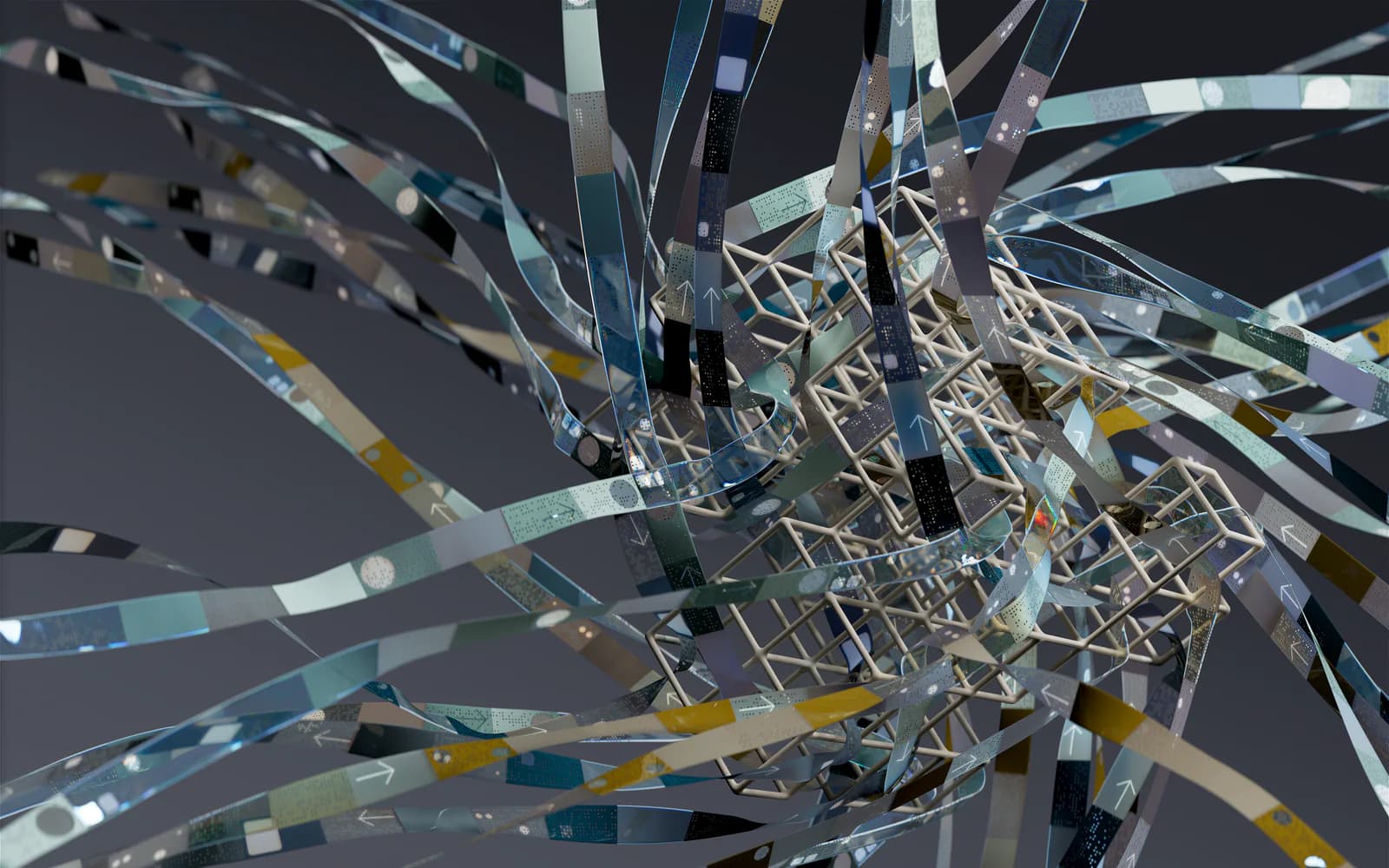
SILSA represents shapes with overlapping slice latents along three axes rather than fragmented voxel tokens. A sparse decoder and shared volumetric anchor lattice coordinate the slice streams, while persistence-diagram supervision tracks topology between neighbors. Against the strongest reported baseline, SILSA improved PSNR by 8.7 percent, coverage by 5.96 points and Betti error by 9.2 percent while using 70 percent fewer tokens than the next-most compact baseline. These are benchmarked generation results, not guarantees for arbitrary geometry.
Why it matters
Sliding-window slice latents preserved cross-sections and long-range topology in one stage.
Limits and context
- These are benchmarked generation results, not guarantees for arbitrary geometry.
Key claims
Sliding-window slice latents preserved cross-sections and long-range topology in one stage.
Qualification: These are benchmarked generation results, not guarantees for arbitrary geometry.
Evidence: source-2026-10-02-008
Sources
- arXiv preprint 2610.02201arXiv · primary research
Corrections
No corrections have been recorded for this story.