frontier models
Thirty Thousand Hours Still Did Not Teach the World to React
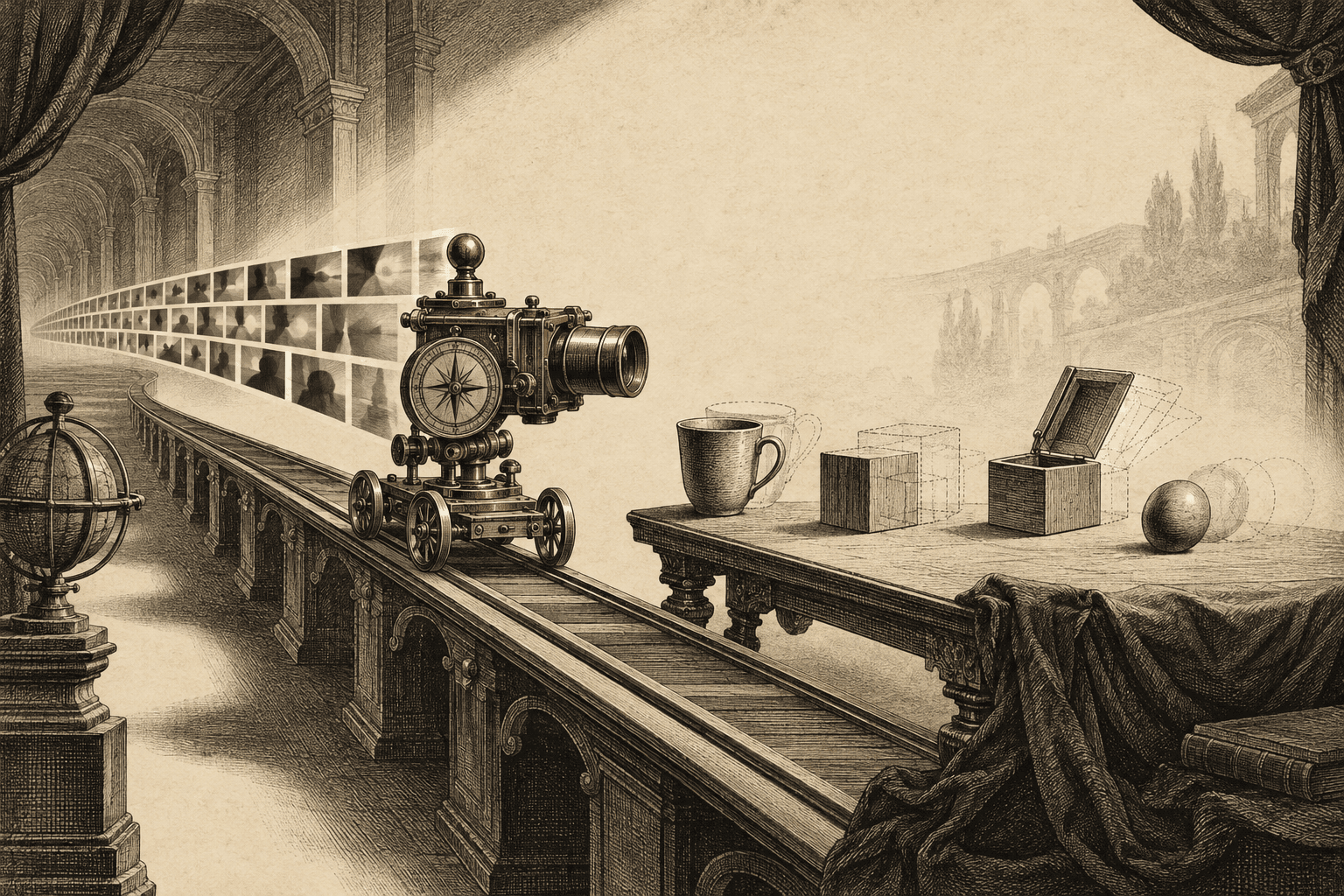
A 100-fold data increase improved egocentric world models unevenly: the modeled agent strengthened while object interactions lagged.
Summary
A 100-fold data increase improved egocentric world models unevenly: the modeled agent strengthened while object interactions lagged.
Researchers scaled egocentric training video to 30,000 hours across more than 1,000 scene types and 14,000 contributors, then tested agent motion and object-interaction fidelity separately. A 100-fold increase improved both, but the agent was modeled much better than the objects it affected, and object fidelity improved slowly. Better visual conditioning reproduced much of the agent gain with less data, while a supervision change redirected capacity toward object dynamics and narrowed—but did not close—the gap. The study argues that more video alone is unlikely to solve physical interaction. Its conclusions are benchmark findings, not a universal ceiling for world models.
Why it matters
A 100-fold data increase improved egocentric world models unevenly: the modeled agent strengthened while object interactions lagged.
Limits and context
- Better visual conditioning reproduced much of the agent gain with less data, while a supervision change redirected capacity toward object dynamics and narrowed—but did not close—the gap.
- Its conclusions are benchmark findings, not a universal ceiling for world models.
Key claims
A 100-fold data increase improved egocentric world models unevenly: the modeled agent strengthened while object interactions lagged.
Qualification: Better visual conditioning reproduced much of the agent gain with less data, while a supervision change redirected capacity toward object dynamics and narrowed—but did not close—the gap.
Evidence: source-2026-10-10-002
Sources
- arXiv preprint 2610.12464, original v1arXiv / submitting research authors · primary research
Corrections
No corrections have been recorded for this story.